Lithium Battery Price in Pakistan for Solar: Costs, Lifespan and Sizing
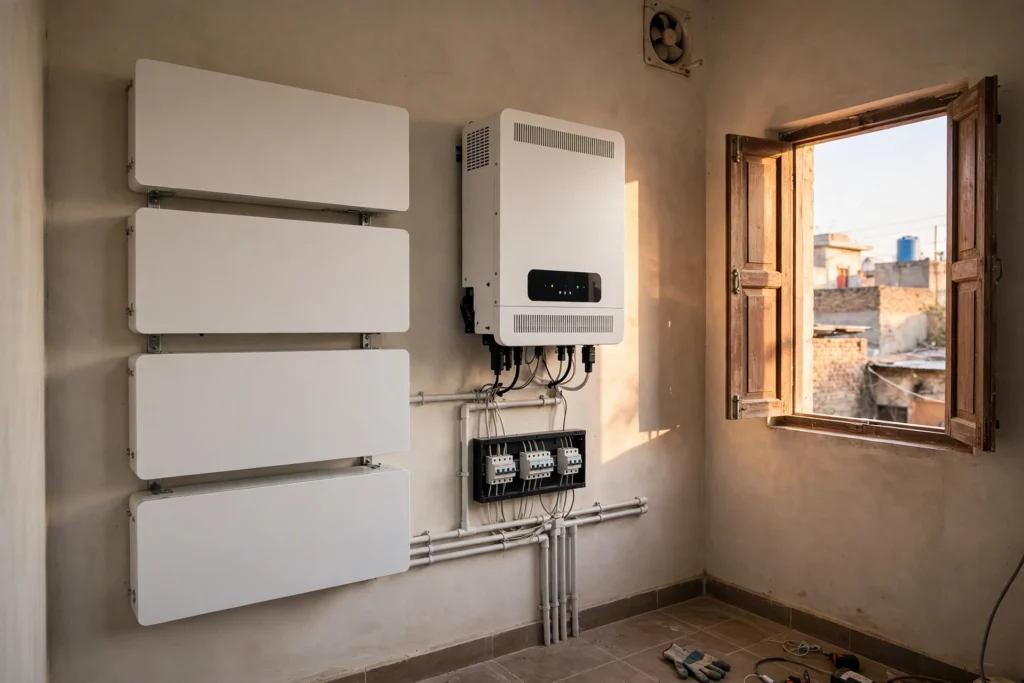
If you are shopping for solar in Pakistan right now, you have probably heard the same advice from every installer: buy lithium, not tubular. A few years ago that advice came with a painful price tag. In November 2026 it is a much easier decision — a good 5 kWh lithium battery for solar now costs around Rs 200,000 to Rs 265,000, and prices have fallen 10–18% over recent months as global lithium costs came down.
But “lithium battery price in Pakistan for solar” is not one number. The same 5 kWh of storage can cost Rs 200,000 or Rs 315,000 depending on the brand, and a 10 kWh bank can cost anywhere from Rs 500,000 to Rs 800,000. The difference is not marketing — it is cell grade, cycle life, warranty, and whether the battery actually talks to your inverter.
This guide gives you real November 2026 prices for the brands actually sold in Pakistan — Narada, PylonTech, Dyness, Inverex, Huawei, BYD, Sacred Sun and more — plus the three questions that matter more than the price tag: how long will it last, how much storage do you actually need, and will it work with your inverter?
Lithium Battery Price in Pakistan for Solar — November 2026
Here is the honest way to read battery prices: compare rupees per kilowatt-hour, not rupees per battery. A “5 kW battery” and a “5 kWh battery” are not the same thing — kW is power, kWh is stored energy — and some sellers blur the two. The table below uses nominal kWh, and the Rs/kWh column lets you compare fairly.
Across the market in November 2026, lithium (LiFePO4) storage costs roughly Rs 45,000 to Rs 65,000 per kWh installed, with most systems landing near Rs 52,000 per kWh. A 5 kWh bank typically costs about Rs 262,000 installed, and a 10 kWh bank about Rs 526,000.
| Brand / Model | Capacity | Price (PKR) | Approx. Rs/kWh | Warranty / Cycles |
|---|---|---|---|---|
| SacredSun rack-mount 51V 100Ah | 5.1 kWh | 200,000 | ~39,200 | LiFePO4, rack mount |
| Livoltek BLF-B51100 | 5.12 kWh | 202,000–204,000 | ~39,500 | LiFePO4, 51.2V 100Ah |
| Growatt Hope 5.0LW-B1 | 5.12 kWh | 205,000 | ~40,000 | LiFePO4, 51.2V 100Ah |
| Itel 51.2V 100Ah | 5.12 kWh | 212,000 | ~41,400 | LiFePO4, 51.2V 100Ah |
| Dyness DL5.0F | 5.12 kWh | 215,000–235,000 | ~42,000–45,900 | 6,000–8,000 cycles, 10-year warranty |
| Narada NESR 51V 100Ah | 5 kWh | 225,000–235,000 | ~45,000–47,000 | 4,000+ cycles, 5-year warranty |
| Dyness DL5.0C | 5.12 kWh | 228,000–275,000 | ~44,500–53,700 | 6,000–8,000 cycles |
| Inverex 5 kW IP21 | 5.12 kWh | 240,000 | ~46,900 | LiFePO4, wall mount |
| Pylontech FIDUS 5.12 kWh | 5.12 kWh | 245,000–265,000 | ~47,900–51,800 | 6,000+ cycles, IP65, 10-year warranty |
| Pylontech UP5000 / US5000 | 4.8–5.12 kWh | 255,000–275,000 | ~53,000–57,300 | 6,000+ cycles, 10-year warranty |
| Solis IntelliHouse | 5 kWh | 255,000 | ~51,000 | 48V-class, high DoD |
| Inverex Power Wall IP65 | 5.32 kWh | 315,000 | ~59,200 | 6,000 cycles, 5–10 year warranty |
| Dyness PowerBox G2 | 10.24 kWh | 500,000–525,000 | ~48,800–51,300 | IP65, fire suppression, 10 kWh class |
| Inverex 11.8 kW IP21 | 11.8 kWh | 515,000 | ~43,600 | LiFePO4, 51.2V |
| Inverex Power Wall 10.6 kWh ⚠️ | 10.6 kWh | ~621,000 | ~58,600 | Price not freshly verified |
| Huawei LUNA2000 10 kWh ⚠️ | 10 kWh | ~800,000+ | ~80,000+ | Price not freshly verified; Huawei inverters only |
| BYD Battery-Box LV 5.0 ⚠️ | 5 kWh | ~280,000 | ~56,000 | Price from Aug 2025 — not freshly verified |
⚠️ = price could not be freshly verified in November 2026.
A few things jump out of that table. First, the value end of the market has moved fast: SacredSun, Livoltek, Growatt and Itel now sell a genuine 5 kWh LiFePO4 pack for around Rs 200,000–212,000 — roughly Rs 40,000 per kWh. Second, the premium brands (PylonTech, Inverex IP65, Huawei) still charge a real premium, and for PylonTech and Inverex that premium buys a longer warranty, a local service network and a battery your inverter already knows how to talk to. Third, 10 kWh does not cost double the 5 kWh price per unit — larger banks are slightly cheaper per kWh because the enclosure, BMS and installation labour are spread across more capacity.
What about a lithium solar battery price in Pakistan for a smaller setup? A 2.56 kWh (25.6V 100Ah) pack — useful for a small UPS-style backup or a 24V system — lists around Rs 115,000–135,000 (Dyness DL2.5 Rs 125,000; Itel 25.6V 100Ah Rs 115,000). And at the other end, 15–16 kWh banks list around Rs 540,000–690,000 (Livoltek 16 kWh Rs 540,000; Dyness PowerBrick 16 kWh Rs 560,000–585,000; Inverex 16 kW Rs 690,000).
Lithium Battery for Solar Price in Pakistan — What a 5 kWh Bank Actually Buys You
A lithium battery for solar price in Pakistan is only meaningful if you know what the bank does at night. A 5 kWh pack does not give you 5 kWh of usable power — a lithium pack delivers roughly 80–90% of its nameplate capacity, so a 5.12 kWh battery gives you about 4.6–4.9 kWh you can actually use.
What does that run? Roughly: fans, lights, router, a fridge and a TV for 6–8 hours, or the same essentials plus one inverter AC for a few hours. It will not run a whole house through the night — that is a 10 kWh job. The most expensive mistake in battery buying is not choosing the wrong brand; it is buying more kWh than you will ever discharge. Capacity you never use still ages, and you paid for it up front.
This is also where the new net billing rules change the maths. Under net billing, the electricity you export to the grid is credited at a much lower rate than the electricity you buy — around Rs 10–11 per unit reported, with NEPRA’s forecast as low as Rs 8.13 — so storing your daytime solar power and using it yourself at night is now worth far more than exporting it. Our net billing guide explains the full picture. In simple terms: the battery is no longer a luxury add-on for load shedding. It is the part of the system that protects your savings.
LiFePO4 vs Lithium-Ion: Which Chemistry Are You Actually Buying?
Here is a confusion worth clearing up, because sellers use the words loosely. Almost every “lithium battery” sold for solar in Pakistan today is LiFePO4 (lithium iron phosphate) — a specific type of lithium-ion chemistry. When a shop says “lithium-ion solar battery”, it almost always means LiFePO4. The older NMC (nickel manganese cobalt) chemistry, common in electric cars and phones, is rarely used for home solar storage here — and for good reason.
LiFePO4 is the safer, longer-lived choice for a home battery, and it handles Pakistan’s heat far better. It is thermally stable, operates safely up to 50–55°C, and does not suffer the thermal-runaway risk that makes NMC a poor fit for a battery sitting in a hot Pakistani home. Every quality lithium module — PylonTech, Narada, Dyness, Inverex — includes a Battery Management System (BMS) that monitors cell voltage and temperature, balances the cells, and shuts the pack down before damage happens. That BMS is not a bonus feature; it is the thing that keeps a lithium battery safe and long-lived.
So when you compare a lithium ion solar battery price in Pakistan, ask the seller one question first: is it LiFePO4? If the answer is vague, or the price is far below the ranges in the table above, you are probably looking at reclaimed cells or a pack whose warranty nobody intends to service.
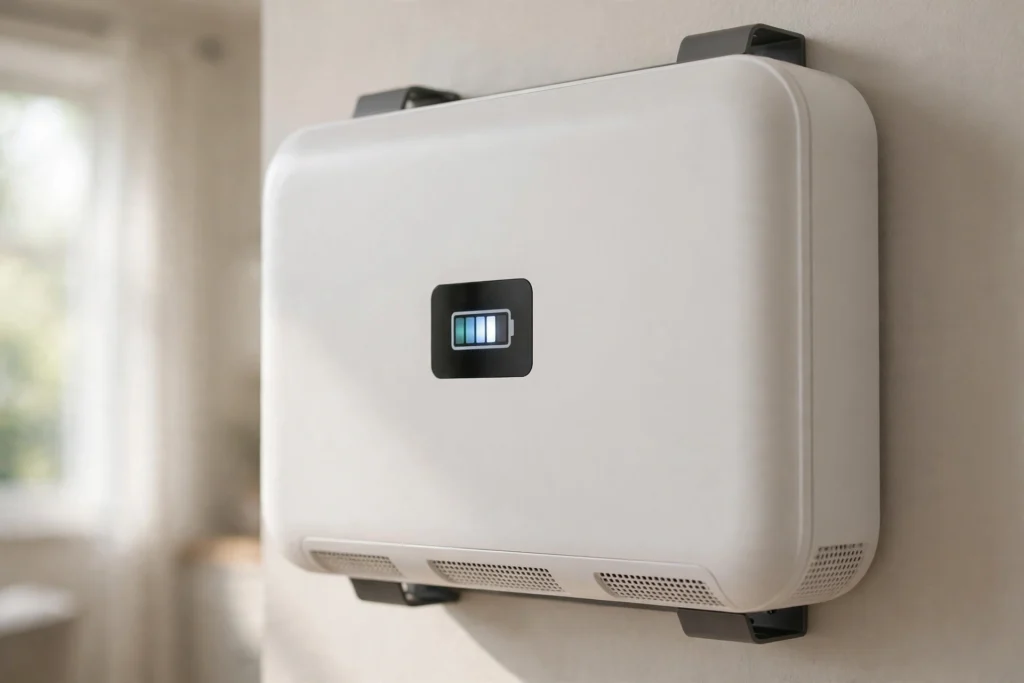
Lifespan: How Long Does a Lithium Battery Really Last?
This is where lithium earns its price. A quality LiFePO4 pack is rated for 6,000 cycles or more at 80% depth of discharge — that is roughly one full charge-discharge cycle every day for 16 years, though in practice manufacturers warranty 10 years and real-world life lands around 10–15 years. Compare that with a tall tubular lead-acid bank, which lasts 3–5 years of daily solar cycling and needs replacing two or three times over the same period.
The cycle ratings behind the prices above, as stated by dealers and manufacturers: PylonTech 6,000+ cycles with a 10-year warranty; Dyness 6,000–8,000 cycles with a 10-year warranty; Narada 4,000+ cycles with a 5-year warranty; Inverex 6,000 cycles with a 5–10 year warranty. Notice that Narada’s cycle rating is lower and its warranty shorter — that is part of why it costs less than PylonTech, and it is a fair trade if the price gap matters to you.
One honest way to compare: divide the price by the cycles. A Rs 245,000 PylonTech pack rated for 6,000 cycles costs about Rs 41 per cycle. A Rs 225,000 Narada pack rated for 4,000 cycles costs about Rs 56 per cycle. The cheaper battery can be the more expensive one over its life — but only if you actually cycle it daily. If your battery mostly sits as backup for occasional load shedding, the cycle count matters less and the upfront price matters more.
A warranty is only worth what the company behind it is worth in Pakistan. “Ten years” can mean ten years of full replacement, or ten years of pro-rated capacity retention with you paying the freight. Get the terms in writing, and check that the company honouring them has a service presence here. This is one reason Inverex and PylonTech command a premium — both have established local service networks, while some cheaper brands are sold by importers who may not be around in five years.
Sizing: How Much Lithium Storage Does Your Home Need?
Do not size the battery from your solar panel capacity. Size it from what you want to keep running when the grid goes down, and for how long. Work through it in this order:
First, decide what has to stay on. Lights, fans, routers and a refrigerator are a modest load — roughly 600–700W. Add one inverter AC and the number roughly doubles to 1,500–1,800W. Decide honestly whether you need whole-home backup or essential-load backup. The answer usually halves the bank.
Second, decide for how long. Multiply that load by the hours of backup you want. In most Pakistani cities the practical target is a few hours of load-shedding cover, not overnight autonomy.
Third, divide by 0.85. A lithium pack delivers roughly 80–90% of its nameplate capacity, so divide your figure by about 0.85 to get the bank size you should buy.
| Use case | Typical load | Hours | Battery size | Estimated lithium cost (PKR) |
|---|---|---|---|---|
| Essential backup (fans, lights, fridge, TV) | 600–700W | 8 | 5 kWh | 200,000–265,000 |
| Moderate home (+ washing machine, computers) | 1,000–1,200W | 7 | 7–8 kWh | 315,000–420,000 |
| Full house with 1 AC | 1,500–1,800W | 6 | 10 kWh | 500,000–620,000 |
| Large home with 2 ACs | 2,500–3,000W | 6 | 15 kWh | 675,000–975,000 |
Battery-bank-only prices at November 2026 rates. A 1.5-ton inverter AC draws very different power depending on the set temperature, insulation and outdoor heat, so treat these as starting points, not promises.
And one more check before you buy: your hybrid inverter has limits on both continuous discharge power and how much battery it can accept. A bank the inverter cannot discharge quickly enough will not run your ACs no matter how many kWh it holds. A 5 kW hybrid inverter paired with a 5 kWh bank is the standard match for a 5kW solar system — and if you are still deciding the system size, that page lays out the full cost picture.
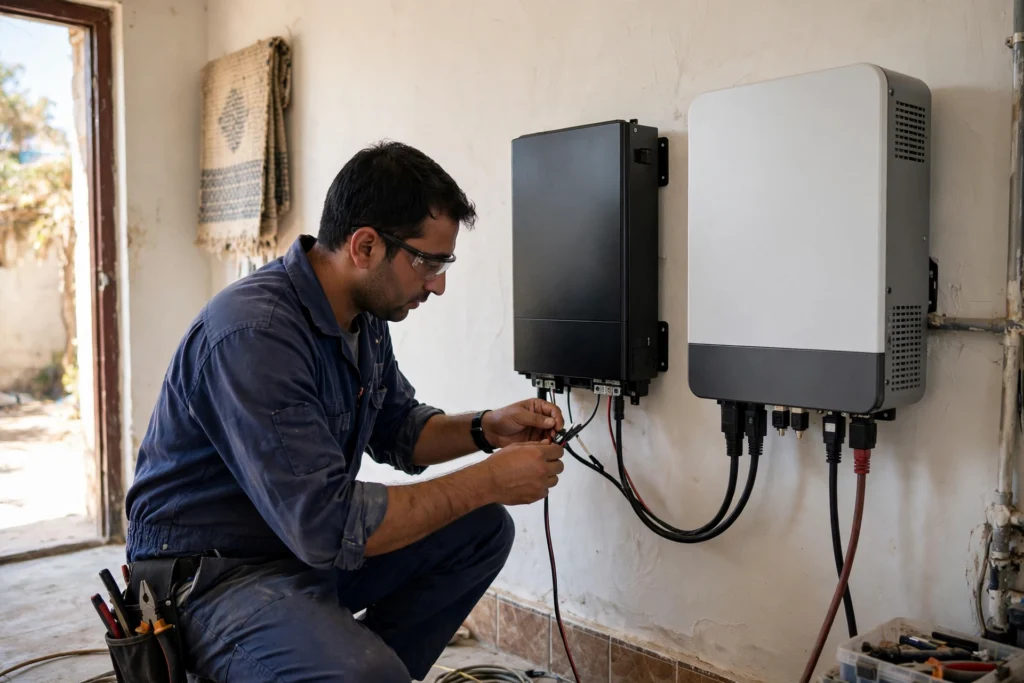
Inverter Compatibility: Will It Work With Your Hybrid Inverter?
This is the question that causes the most expensive mistakes. A lithium battery is not a drop-in replacement for a tubular battery. It needs to communicate with your hybrid inverter — over CAN or RS485 — so the inverter knows the battery’s state of charge, temperature and limits. A pack that is not on your inverter’s approved battery list loses closed-loop control, and that is the single most common cause of batteries that “never charge fully” or die early.
Before you pay, check three things:
- Is the battery on your inverter’s supported list? Inverex batteries pair natively with Inverex hybrid inverters; PylonTech is certified with a very wide range (Growatt, Solis, Deye, Inverex and more); Dyness works with Growatt, Voltronic/Deye and most mainstream hybrids; Huawei’s LUNA2000 works only with Huawei inverters. If you already own the inverter, the battery choice is partly made for you. Our solar inverter price guide covers the inverter side of the same decision.
- Does the battery speak the right protocol? Ask for the BMS communication protocol (CAN/RS485) and confirm it matches your inverter’s requirements. A cheap pack with no communication is a dumb bucket the inverter has to guess at — and the guess is usually wrong.
- Is the voltage right? Most home lithium banks are 48V-class (51.2V nominal). A 25.6V pack belongs on a 24V system, not a 48V hybrid inverter, unless the inverter manufacturer explicitly supports it. The model name alone will not tell you — check the datasheet.
Buying Checks: Original vs Copy, Warranty Card, BMS
Storage is the most counterfeited part of a solar system in Pakistan, because the failure is invisible for the first year or two. A fake pack looks identical from the outside; the difference shows up as capacity fade in year three, when the seller is long gone. Before you accept delivery:
- Verify the serial number with the manufacturer. Every genuine brand can confirm a pack serial. A serial that does not resolve is not a pack you should pay brand money for.
- Ask for the warranty card, in writing. Confirm the warranty years, what it covers (full replacement vs pro-rated capacity), and who honours it in Pakistan. Keep the card — without it, most warranty claims go nowhere.
- Check the BMS and communication. Ask which protocol the BMS uses and whether the battery is on your inverter’s approved list. If the seller cannot answer, that is your answer.
- Check the installation, not just the box. Correct DC breakers and fusing, adequate ventilation, and a location out of direct afternoon sun materially extend pack life in Pakistani conditions. A wall-mount IP65 pack (like the PylonTech FIDUS or Dyness PowerBox G2) can go outdoors; an IP20 rack pack needs a dry indoor spot.
- Be sceptical of quotes far below the ranges above. At the floor of this market you are usually buying reclaimed cells or a pack with a warranty nobody intends to service. If a “PylonTech” is offered at Rs 150,000, it is not a PylonTech.
Lithium vs Tubular Lead-Acid: Is the Switch Worth It?
Most Pakistani homes still run on tall tubular batteries — Osaka, Phoenix, AGS, Exide — and they are not bad batteries. A bank of four 200Ah tubular batteries costs roughly Rs 160,000–180,000, far less than a 5 kWh lithium pack upfront. So why is everyone switching?
Because the cheap option is only cheap once. A tubular bank lasts 3–5 years of daily solar cycling, delivers only about 50% of its rated capacity (the rest is held back to protect the plates), needs watering and a ventilated battery room, and weighs several times more than a lithium pack of the same usable energy. Over 10–12 years you will buy that tubular bank two or three times — Rs 320,000–540,000 in total, plus the hassle of replacement — while a single lithium pack costing Rs 200,000–265,000 is still running, having delivered 80–90% of its capacity every single day, with no maintenance at all.
That said, tubular still makes sense in one situation: a home that only needs backup for occasional load shedding and rarely cycles the battery deeply. If the battery mostly sits charged and waits, the tubular bank’s short cycle life never becomes a problem, and the lower upfront cost wins. For everyone else — anyone cycling daily, anyone on net billing who wants to use their own solar power at night — lithium is the cheaper battery over its life, not just the better one.
For the full picture across all battery types, including tubular prices brand by brand, see our all-brands solar battery price guide.
FAQs
What is the lithium battery price in Pakistan for solar in November 2026?
A 5 kWh LiFePO4 lithium battery for solar costs roughly Rs 200,000 to Rs 265,000 in November 2026, depending on the brand. Across the market, lithium storage costs about Rs 45,000–65,000 per kWh installed, with most systems landing near Rs 52,000 per kWh. A 10 kWh bank costs about Rs 500,000–620,000. Always confirm the final quotation before ordering — prices move with the dollar, import duties and stock.
What is the lithium solar battery price in Pakistan for a 5kW system?
A 5 kW hybrid system is normally paired with a 5 kWh lithium bank, which costs about Rs 200,000–265,000 for the battery alone. Adding storage plus the hybrid inverter to a 5 kW on-grid system adds roughly Rs 275,000 in total — the battery plus the inverter upgrade and extra DC protection. A 5 kWh bank covers essential loads plus one inverter AC for a few hours, not the whole house overnight.
How much does a lithium battery for solar cost for a 10kW system?
A 10 kW hybrid system normally carries a 10 kWh lithium bank, which costs about Rs 500,000–620,000 in November 2026. The most common 10 kWh options are the Dyness PowerBox G2 (Rs 500,000–525,000) and the Inverex 11.8 kW pack (Rs 515,000). Going hybrid instead of on-grid at 10 kW adds roughly Rs 780,000 in total, because that figure includes the hybrid inverter as well as the battery.
What is the lithium ion solar battery price in Pakistan per kWh?
About Rs 45,000–65,000 per kWh installed, with most quotes landing near Rs 52,000 per kWh. Value-tier brands (SacredSun, Livoltek, Growatt, Itel) come in near Rs 40,000 per kWh at dealer list prices, while premium brands (PylonTech, Huawei) sit at Rs 52,000–80,000 per kWh. Remember that “lithium-ion” in the solar market almost always means LiFePO4 — check the chemistry before you compare prices.
How long does a lithium battery last for solar in Pakistan?
A quality LiFePO4 pack is rated for 6,000+ cycles at 80% depth of discharge, which works out to roughly 10–15 years of daily use; manufacturers typically warranty 10 years (PylonTech and Dyness) or 5 years (Narada). That compares with 3–5 years for a tubular lead-acid bank under the same daily cycling. Real-world life depends on temperature, depth of discharge and whether the battery communicates properly with your inverter.
Will any lithium battery work with my hybrid inverter?
No. Voltage alone is not enough — the battery must be on your inverter’s approved list and speak the same BMS communication protocol (CAN or RS485). Inverex batteries pair natively with Inverex inverters, PylonTech works with most major brands, Dyness works with Growatt, Voltronic/Deye and others, and Huawei’s LUNA2000 works only with Huawei inverters. Always check compatibility before you buy, not after the battery is on your wall.
Conclusion
Lithium has stopped being the expensive option for solar storage in Pakistan. In November 2026 a genuine 5 kWh LiFePO4 pack starts around Rs 200,000, a 10 kWh bank around Rs 500,000, and the price per kWh — about Rs 45,000–65,000 installed — keeps drifting down as global lithium costs fall. Over a 10-year life, lithium is now cheaper than tubular lead-acid for any home that cycles its battery daily, and under net billing it is the part of the system that protects your savings by letting you use your own solar power at night instead of exporting it cheaply.
So buy on three things, in this order: compatibility with your inverter, honest cycle life and warranty terms, and then price per kWh. A Rs 200,000 pack that your inverter cannot talk to is a Rs 200,000 mistake; a Rs 245,000 PylonTech with a 10-year warranty and 6,000 cycles is a battery you will forget about for a decade. And whatever you buy, verify the serial number, get the warranty card in writing, and confirm the final price with the seller before paying an advance — because the cheapest quote in this market is very often the most expensive battery you will ever own.
If you are still choosing panels to go with your storage, our Longi solar panel price guide covers the panel side of the same system — and if you want the full battery picture, including tubular prices, the all-brands battery guide is the companion to this one.
Rates last verified: 5 November 2026. Prices are retail/dealer-listed prices and move with the dollar, duties and stock — confirm before you buy.