5kW Solar System Price in Pakistan (2026) — Real Cost Breakdown, Net Billing Impact & How to Avoid Getting Overcharged
If your WAPDA bill has been sitting around Rs. 40,000 to Rs. 60,000 a month, you’ve probably already started asking around about a 5kW solar system. And you’ve probably already noticed the problem: everyone quotes you a different number. One vendor says Rs. 550,000. Another says Rs. 950,000. A cousin in Islamabad says he paid Rs. 785,000 with net metering included. A Facebook group tells someone their quote is “overpriced” without explaining why.
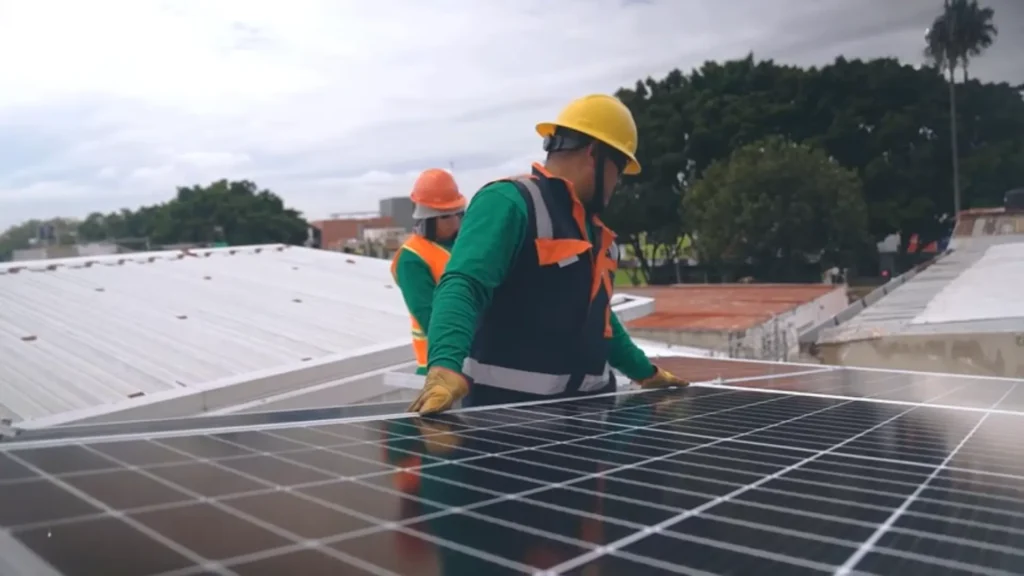
We install these systems every week in Faisalabad, and we get asked the same question almost daily: “Is this quote fair, or am I being cheated?” So instead of another generic price list, this guide answers that question properly — with the actual cost breakdown, what changed under net billing in 2025-26, and the specific tricks some installers use to quote you a smaller system than what you’re paying for. It also helps to know the solar panel installation timeline before you commit to a system.
5kW Solar System Price in Pakistan — Quick Answer
As of October 2026, a complete 5kW solar system in Pakistan costs:
- On-grid (no battery): Rs. 550,000 – 780,000
- Hybrid (with battery backup): Rs. 780,000 – 1,250,000
- Off-grid (fully battery-based, no WAPDA export): Rs. 900,000 – 1,400,000+
These are complete, installed prices — panels, inverter, mounting structure, wiring, protection equipment, and labor. If you’ve been quoted well outside these ranges, keep reading, because the reason usually isn’t the price being wrong — it’s the specification being different from what you think you’re buying.
Why the Same “5kW System” Gets Quoted at Rs. 500,000 by One Vendor and Rs. 1.1 Million by Another
This is the question we get asked more than any other, and it deserves a straight answer instead of a shrug.
A “5kW solar system” is not one product. It’s a label that gets attached to three genuinely different configurations, and vendors rarely explain which one they’re quoting you.
The Rs. 500,000–600,000 quotes are almost always a bare-bones on-grid system: budget or B-grade panels (sometimes without proper AEDB documentation), a basic on-grid inverter, no net metering paperwork included, and often no formal warranty backing. We’ve seen real packages advertised at this level with 440–445W panels and a locally-assembled inverter with a short warranty. It can work, but you’re taking on real risk on panel degradation and inverter longevity.
The Rs. 700,000–950,000 quotes are the honest middle — Tier-1 panels (Jinko, Longi, JA Solar, Canadian Solar, Trina), a branded hybrid or on-grid inverter (Growatt, GoodWe, Solis, Inverex), proper mounting structure, and net metering documentation included. This is what we’d recommend for most homes, and it matches what most of the credible installers across Pakistan are actually charging in 2026.
The Rs. 1,000,000–1,150,000+ quotes usually include a lithium battery for backup during load shedding, or premium components (Huawei inverters, higher-tier panels), or both. This is the hybrid-with-battery segment.
The one thing that should worry you more than the price itself: we regularly see complaints where a customer paid for a “5kW” system and later discovers, after checking the actual nameplate wattage on the panels and the inverter’s rated capacity, that they received closer to 4.2kW. Before you sign anything, do this simple check yourself:
Panel count × panel wattage ÷ 1000 should equal at least 5. For example, 9 panels × 580W = 5,220W — that’s a genuine 5kW-plus array. If your quote lists 9 panels at 450W, that’s only 4.05kW, not 5kW.
Is a 5kW System Actually Right for You?
Before locking in a size, check where you actually fall:
| Your situation | Recommended system size |
|---|---|
| 5–8 marla home, 400–600 units/month | 5kW is usually right |
| 8–10 marla home, 600–800 units/month | Consider 6kW instead |
| 3–5 marla home, under 400 units/month | 3kW may be more cost-efficient |
| Home or shop running 2+ inverter ACs regularly | 5kW hybrid with battery, or step up to 6-7kW |
Pull out your last 2-3 WAPDA bills and check your average monthly units. A 5kW system in Punjab generates roughly 550–650 units a month depending on season and shading — if your consumption is meaningfully higher than that, sizing up now is cheaper than adding panels later (mismatched panel batches and inverter capacity limits make expansion messier than it sounds).
On-Grid vs. Hybrid vs. Off-Grid: Which 5kW System Do You Need?
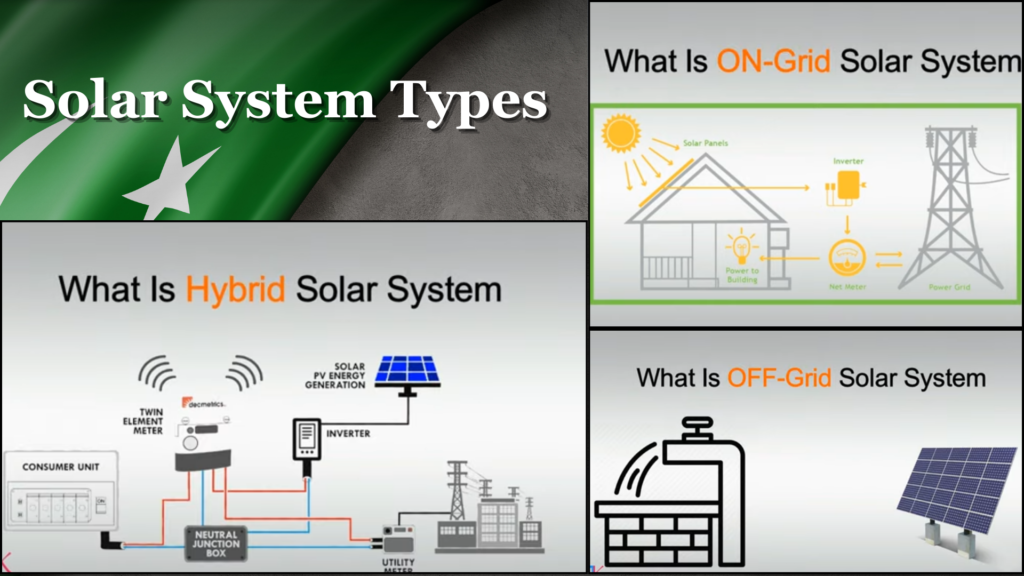
| Feature | On-Grid | Hybrid | Off-Grid |
|---|---|---|---|
| Works during load shedding | No | Yes (with battery) | Yes |
| Net metering / net billing eligible | Yes | Yes | No |
| Battery required | No | Optional | Yes |
| Typical price (5kW) | Rs. 550,000 – 780,000 | Rs. 780,000 – 1,250,000 | Rs. 900,000 – 1,400,000+ |
| Best for | Areas with stable grid supply, minimal outages | Most Pakistani homes — balances savings with backup | Off-grid plots, areas with no reliable WAPDA connection |
For most homes in Faisalabad, Lahore, or similar urban areas with a working WAPDA connection, a hybrid system is the practical middle ground — you get net billing credits during the day and battery backup for evening load shedding, without the higher cost of a fully off-grid setup.
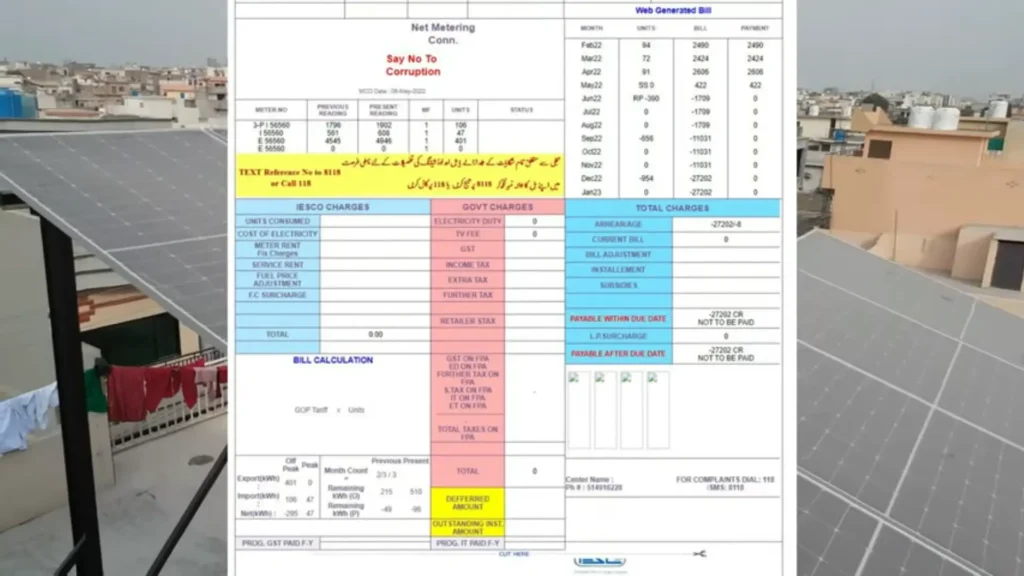
What Net Billing Actually Means for Your 5kW ROI in 2026
This is the part almost nobody explains clearly, and it directly affects how fast your system pays for itself.
Under the older net metering rules, surplus electricity you exported to the grid was credited at close to the same rate you paid for imported electricity — roughly a 1:1 swap. Under NEPRA’s revised Prosumer Regulations, new connections now operate on net billing: you’re credited for exported units at a separate, lower buyback rate, while grid electricity you consume is still billed at the full residential tariff.
In FESCO’s territory (Faisalabad, Sargodha, Jhang, Toba Tek Singh, Chiniot, and surrounding districts), residential tariffs currently run roughly Rs. 48–60 per unit, while exported solar units are credited at roughly Rs. 10–13 per unit under the new framework. That’s a real gap — meaning the value of a unit you use yourself is now four to five times the value of a unit you export.
Practical effect on sizing: under net billing, oversizing your system to “sell more back to the grid” no longer makes financial sense the way it used to. The smarter approach in 2026 is to size your system close to your actual daytime + evening consumption, and let a battery (hybrid system) store your midday surplus for evening use instead of exporting it at the lower buyback rate. This is a genuine shift in how 5kW systems should be sized compared to two years ago.
Even with the lower buyback rate, residential payback periods in the FESCO area currently run about 3 to 4 years, with the system continuing to produce for 20+ years afterward. Commercial and industrial daytime-heavy loads pay back faster — often under 3 years — because they consume more of their own solar generation directly rather than exporting it.
Complete Cost Breakdown of a 5kW Solar System
Here’s where your money actually goes on a mid-tier, properly documented 5kW hybrid system:
| Component | Estimated Cost (PKR) |
|---|---|
| Solar panels (9–10 × Tier-1, 585W class) | 203,580 – 277,365 |
| Hybrid/on-grid inverter | 140,000 – 250,000 |
| Mounting structure | 45,000 – 80,000 |
| DC & AC cabling | 20,000 – 40,000 |
| Surge protection & earthing | 20,000 – 40,000 |
| Installation & labor | 60,000 – 100,000 |
| Net metering/billing documentation & meter | 40,000 – 80,000 |
| Battery (optional, lithium) | 200,000 – 350,000 |
A note on earthing: this is one of the most skipped safety items on budget quotes. Proper earthing protects your household wiring and appliances from surge damage and is a basic requirement under electrical safety codes — if a quote doesn’t list it separately, ask why.
Panel and Inverter Brands Commonly Used in Pakistan’s 5kW Systems
Buyers frequently ask us to specify brands, so here’s an honest breakdown of what’s actually being installed at each price tier in 2026:
Tier-1 panels (recommended): Jinko Solar (Tiger Neo N-Type, 585-590W), Longi Solar (Hi-MO 7 / Hi-MO X10), JA Solar, Canadian Solar (HiKu), Trina Solar (Vertex S+). These come with 25-year performance warranties and are what most credible EPC companies quote by default.
Common inverter pairings: Growatt, GoodWe, Solis, and Inverex (Nitrox series) are the most frequently installed for residential hybrid systems in this price range. Huawei (SUN2000 series) sits at the premium end. If you’re told your battery is a specific lithium model, ask directly whether it’s confirmed compatible with your quoted inverter brand — mismatched battery-inverter pairings are a real, recurring installation problem, particularly with third-party lithium batteries paired against unfamiliar hybrid inverter firmware.
Budget-tier components (unbranded or lightly-branded panels below 500W, generic inverters) show up in the lowest quotes. They’re not automatically bad, but they typically carry shorter or unenforceable warranties — which matters over a 25-year panel lifespan.
Solar Installation in Faisalabad: What’s Different Locally
Faisalabad sits in FESCO’s service territory, which covers Faisalabad, Sargodha, Jhang, Toba Tek Singh, Chiniot, Mianwali, Khushab, and Bhakkar. A few things specific to installing here that don’t apply everywhere:
- Dust and lint. Faisalabad’s industrial and textile-heavy environment means rooftop panels — whether near D-Ground, Susan Road, Jaranwala Road, Madina Town, Peoples Colony, or the industrial zones ringing the city — collect more airborne dust and textile particulate than a typical residential area elsewhere in Punjab. This measurably reduces output if panels aren’t cleaned regularly. We recommend a cleaning schedule every 3-4 weeks in summer, more often near mills.
- Net billing/metering timeline. For a residential 5kW system in FESCO territory, expect roughly 2-4 weeks for physical installation, plus an additional 6-10 weeks for FESCO to process and activate net billing — so budget close to 2-3 months total from signed contract to a fully export-credited connection.
- Eligibility basics. You’ll need a three-phase connection (single-phase consumers must upgrade first), no outstanding bill arrears at the time of application, and your system’s capacity must not exceed your sanctioned load with FESCO.
- Where to check status. FESCO’s net billing/net metering applications can be tracked through your sub-divisional office, with escalations typically routed through the Abdullahpur office in Faisalabad. FESCO’s general helpline is 0800-66337.
Solar Prices Elsewhere in Pakistan: City-by-City Notes
| City / DISCO | What’s different |
|---|---|
| Lahore (LESCO) | High demand for solar in recent years means some areas face transformer capacity limits — apply early. Net billing approval is generally efficient. |
| Karachi (K-Electric) | K-Electric requires a mandatory third-party inspection and, in many cases, a smart meter upgrade before approval — budget an extra Rs. 25,000-40,000 for this. |
| Islamabad/Rawalpindi (IESCO) | IESCO mandates a structural audit for rooftop mounts above 5kW on some applications, adding to timeline and minor cost. |
| Faisalabad and surrounding (FESCO) | See section above — dust management and the 2-3 month full activation timeline are the main local factors. |
How to Avoid Getting Overcharged or Scammed on a 5kW System
Genuine, recurring patterns we see reported by customers across Pakistan:
- Verify your system is actually 5kW. Multiply panel count by panel wattage. If it doesn’t reach 5,000W, you’re not getting what you’re paying for — regardless of what the quote is titled.
- Get warranty terms in writing. A verbal “10-25 year warranty” from a salesperson is not enforceable. Ask for the manufacturer’s written warranty document, not just the installer’s word.
- Ask who controls your inverter’s monitoring app. Some installers register the monitoring app under their own account, meaning you can’t independently verify your system’s real output or catch faults early. Insist on account ownership under your own name/number at handover.
- Check the installer is NEPRA-recognized. Unlicensed installers cannot legally process your net metering/net billing connection with your DISCO, meaning you could pay for a full system and still fail to get it grid-connected. Ask for their NEPRA registration details before paying any advance.
- Be wary of “free solar” claims. There is no residential free-panel government scheme in Pakistan. Any offer framed this way is a red flag.
- Never pay full advance to a company with no verifiable office or NTN. WhatsApp-only vendors who disappear after partial work are a recurring complaint pattern — verify a physical business address and registration before any large payment.
- Cross-check your quote against the ranges in this guide. If a quote is dramatically below Rs. 550,000 for a genuinely Tier-1, fully-documented 5kW system, ask specifically what’s being cut — panel grade, warranty, or net metering paperwork are the usual answers.
Financing and Installment Options for a 5kW System
A 5kW system is a significant one-time cost for most households, and financing is a real, common path — not a niche option:
- Bank renewable-energy financing schemes. The State Bank of Pakistan has renewable energy financing facilities available through commercial and specialized banks, covering domestic solar installations. Terms, markup rates, and required documentation vary by bank, so it’s worth getting quotes from 2-3 banks alongside your installer quote.
- Installer-arranged installment plans. Many EPC companies now offer in-house installment structures, typically requiring a down payment (often 30-50%) with the balance spread over months. Always get the total cost including markup in writing before agreeing — compare it against the cash price to understand the real cost of financing.
- BNPL/installment marketplaces. A handful of Pakistani buy-now-pay-later platforms have started listing solar products, though inventory and terms are inconsistent — treat these as a secondary option and confirm warranty support still comes from the actual manufacturer/installer, not just the financing platform.
If you’re financing, ask your installer directly what the cash price vs. financed price difference is — this gap is sometimes larger than the interest rate suggests.
How Much Electricity Does a 5kW System Actually Produce?
| City | Approximate daily output |
|---|---|
| Faisalabad | 19–26 kWh |
| Lahore | 21–27 kWh |
| Karachi | 24–30 kWh |
| Islamabad | 20–26 kWh |
| Multan | 24–30 kWh |
This translates to roughly 550-650 units a month in Punjab’s climate, with meaningfully lower output in December-January (shorter days, more overcast periods) and peak output May-August — though Faisalabad’s summer dust load can offset some of that seasonal peak if panels aren’t cleaned regularly.
What Can a 5kW System Actually Run?
| Appliance | Typical quantity supported |
|---|---|
| Ceiling fans | 5–8 |
| LED lights | 10–20 |
| Refrigerator | 1 |
| Inverter AC (1–1.5 ton) | 1, sometimes 2 with careful load management |
| LED TV | 1–2 |
| Washing machine | 1 |
| Water pump / motor | 1 |
Running all of these simultaneously — especially two ACs at once — will typically exceed what a 5kW system comfortably supports without drawing supplemental grid power. This is normal and expected; it doesn’t mean the system is undersized.
A Real Example: What a 5kW Hybrid System Actually Saves
Take a household in Faisalabad with a monthly WAPDA bill averaging Rs. 45,000 (roughly 650 units at current FESCO residential tariffs). After installing a 5kW hybrid system with lithium battery backup:
- Daytime consumption is covered almost entirely by solar generation
- Evening load (lights, fans, TV, one AC) draws from battery storage instead of the grid
- Remaining shortfall (cloudy days, unusually high load) is topped up from WAPDA at standard tariff, with any daytime surplus credited at the net billing export rate
Realistic outcome: monthly WAPDA bill drops to roughly Rs. 8,000–15,000, depending on season and household habits — a reduction of 65-80%, not the “zero bill forever” claim some vendors make. Full elimination of the bill is possible with careful load management and sufficient battery capacity, but budgeting for a modest residual grid bill is the honest expectation.
Frequently Asked Questions
What is the total cost of installing a 5kW solar system in Pakistan in 2026, including net metering?
A complete, documented 5kW system with net metering/net billing included typically costs Rs. 550,000-780,000 for on-grid, or Rs. 780,000-1,150,000 for hybrid with battery backup, including the meter and DISCO documentation.
Which solar system is best for home use in Pakistan?
For most homes consuming 500-700 units monthly with occasional load shedding, a 5kW hybrid system with battery backup offers the best balance of upfront cost, daily savings, and outage protection. Homes with stable grid supply and no outage concerns can save further with a simpler on-grid system.
How is solar installation done in Faisalabad?
A licensed installer conducts a site survey and load assessment, designs the system and provides a written quotation, installs the mounting structure and panels, wires the inverter and safety equipment, and then files net billing documentation with FESCO. Physical installation typically takes 2-4 weeks; FESCO’s net billing activation adds another 6-10 weeks.
How much power does a 5kW solar system produce per day?
Roughly 19-27 kWh per day depending on city and season, translating to approximately 550-650 units per month in most of Punjab.
Is a 5kW system enough for a house?
Yes, for most 5-8 marla homes consuming 400-700 units monthly. Larger homes or those running multiple ACs regularly should consider 6kW or above.
What is the price of the best 5kW solar inverter in Pakistan?
Reliable hybrid inverters (Growatt, GoodWe, Solis, Inverex) for a 5kW system typically cost Rs. 140,000-250,000, while premium options like Huawei run higher. Budget on-grid-only inverters can be found for less but usually carry shorter warranties.
What is the profitability of a solar system in Pakistan under the new net billing rules?
Residential systems still pay back their cost in roughly 3-4 years even under net billing’s lower buyback rate, because self-consumed solar units (valued at the full retail tariff) are worth several times more than exported units. After payback, the system continues producing for 20+ years.
How do I know if my solar quote is accurate or overpriced?
Compare it against the ranges in this guide by system type, confirm the actual panel wattage × count reaches your stated capacity, check whether net metering documentation and a proper warranty are included, and get at least two comparison quotes from NEPRA-recognized installers before committing.