20kW Solar System Price in Pakistan (2026): The Complete, Honest Guide
If you’ve spent an evening searching “20kW solar system price in Pakistan,” you’ve probably noticed something frustrating: every website quotes a different number. One site says 1.5 lakh wait, that’s clearly a typo for 15 lakh. Another says 19 lakh. A third says 35 lakh. For the same size system.
You’re not going crazy, and you’re not being scammed by your search results. The range is wide because the number depends on real variables panel tier, inverter brand, whether you add a battery, and how honest the installer quoting you actually is. This guide walks through all of it: what a 20kW system really costs in August 2026, how the recent change to Pakistan’s net metering rules affects your payback period, and because this matters more than most guides admit how to avoid the handful of scams that specifically target 20kW-scale buyers.
Who Actually Needs a 20kW Solar System?
A 20kW system is a serious jump up from the popular 5kW–10kW residential range. It’s built for:
- Large homes (2-Kanal and above) with monthly electricity bills between PKR 100,000 and 170,000
- Joint family houses running 5 or more air conditioners, multiple refrigerators, and deep freezers simultaneously
- Small commercial setups — clinics, schools, retail outlets, offices, and light manufacturing units — with heavy daytime power draw
- Properties already on a three-phase electricity connection, which a 20kW system requires
If your last few WAPDA/DISCO bills have consistently crossed the PKR 90,000 mark, or you’re running your business mostly during daylight hours, 20kW is usually the right starting point — not oversized, not undersized.
If your bill sits closer to PKR 40,000–70,000, you’d likely get better value from a 10kW or 15kW system instead — a 20kW system sized for a smaller load just means slower payback on capacity you’re not using.
How Much Does a 20kW Solar System Cost in Pakistan? (2026 Price Breakdown)
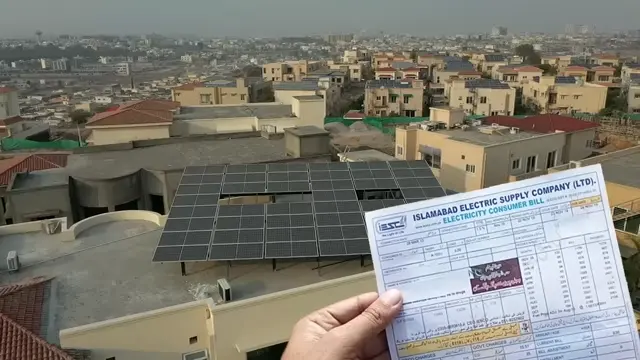
Here’s the real, itemized cost — not a single vague number, but what you’re actually paying for, component by component.
| Component | Specification | Price Range (PKR) |
|---|---|---|
| Solar panels | 32–34 × 585–615W Tier-1 N-type (Jinko Tiger Neo, LONGi Hi-MO, JA Solar, Trina, Canadian Solar) | 9.5 – 11.5 Lakh |
| Inverter (on-grid) | 20kW three-phase (Huawei SUN2000, Sungrow, Solis) | 4.3 – 5.6 Lakh |
| Mounting structure | Galvanized steel or aluminum, engineered for wind/seismic load | 1.5 – 2.2 Lakh |
| DC/AC cabling & protection | Copper cabling, breakers, surge protection devices, earthing, DB box | 1.8 – 2.6 Lakh |
| Net metering / net billing filing | DISCO documentation, bidirectional meter, application processing | 0.6 – 1.0 Lakh |
| Installation & commissioning | Labor, transport, testing, handover | 0.8 – 1.6 Lakh |
| Total — turnkey on-grid 20kW system | PKR 19 – 24 Lakh | |
| Battery (hybrid only) | 25–30kWh LiFePO4 (lithium) bank | 8 – 13 Lakh |
| Total — turnkey hybrid 20kW system (with battery) | PKR 30 – 38 Lakh |
Why the price range is so wide (and why some quotes you’ll see online look completely different): Panel wattage and tier matter — a Tier-1 N-type TOPCon panel costs more than an unbranded Tier-3 panel but performs and lasts significantly longer. Inverter brand matters just as much: a Huawei or Sungrow inverter with strong MPPT tracking and a 10-year warranty costs more than an entry-level Growatt or generic unit, but fails less and generates more usable energy over its life. Site complexity — roof type, structural reinforcement needs, cable run length — adds further variation. If a quote you’ve received is dramatically below PKR 18 lakh for a “complete” 20kW on-grid system, ask specifically what panel tier and inverter brand is included before assuming it’s a good deal.
On-Grid vs Hybrid: Which 20kW System Should You Choose?
| Feature | On-Grid System | Hybrid System |
|---|---|---|
| Battery required | No | Optional |
| Works during a power outage | No | Yes (with battery) |
| Net billing eligible | Yes | Yes |
| Typical cost | PKR 19–24 Lakh | PKR 30–38 Lakh |
| Payback period | 3–4 years | 5–7 years |
| Best for | Stable-grid areas, daytime-heavy commercial loads | Areas with frequent load shedding, clinics, cold storage, critical operations |
For most homeowners and daytime-operating businesses, on-grid is the more financially sound choice. Battery storage at 20kW scale adds PKR 8–13 lakh and only pays for itself if outages are genuinely costing you money or comfort — a clinic that can’t afford downtime, a cold storage unit, or a household in an area with heavy, unpredictable load shedding. If your grid supply is reasonably stable and most of your consumption happens during the day, hybrid is an expensive insurance policy you may not need.
The Change Nobody’s Explaining Properly: Net Metering Is Gone. Net Billing Is Here.
This is the single most important update for anyone buying solar in Pakistan right now, and it’s the part most price guides gloss over or skip entirely.
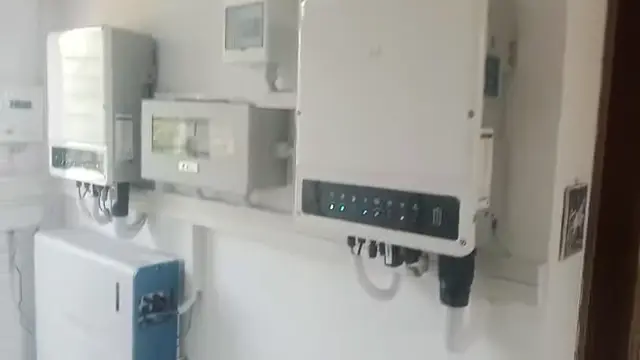
In February 2026, NEPRA (National Electric Power Regulatory Authority) rolled out the Prosumer Regulations 2026, replacing the decade-old net metering framework with a new net billing system.
What actually changed:
- Old system (net metering): Every unit you exported to the grid was credited at the same rate you paid for imported electricity — a true one-to-one exchange. This is what made solar payback periods so attractive for years.
- New system (net billing): Your exported surplus is now bought back at the National Average Power Purchase Price (NAPPP) — roughly PKR 10–11 per unit — while you still pay the full retail tariff (PKR 45–55/unit) for anything you import from the grid. That’s a significant cut from the old rate, which effectively hovered around PKR 27/unit before the change.
What this means for a 20kW system specifically:
- Self-consumption now matters far more than exporting. Under net billing, the money is in using the power you generate directly — running your ACs, motors, and appliances during daylight hours — rather than exporting a large surplus and buying it back at a fraction of the price later.
- If you’re an existing net-metering customer, NEPRA has confirmed your current contract terms remain protected until they naturally expire — you continue billing under the old rules. However, any modification that increases your system’s output (like adding more panels) will cause you to lose that grandfathered arrangement.
- New applicants from February 2026 onward fall under the new net billing rules by default.
- Payback periods are still reasonable — 3–4 years on-grid for most consumption profiles — but the math now rewards sizing your system closer to your actual daytime usage rather than maximizing export capacity.
If an installer quotes you savings figures based on the old one-to-one net metering rate, that number is now inaccurate for a new connection. Always ask whether the payback estimate you’re given accounts for the 2026 net billing buyback rate.
How Much Can a 20kW System Actually Generate? (City-by-City Data)
Generation depends heavily on your city’s sun exposure. Here’s what a properly installed 20kW system realistically produces across major Pakistani cities, based on average peak sun hours and a standard 78% system performance ratio:
| City | Peak Sun Hours/Day | Monthly Generation (Units) | Annual Generation (Units) |
|---|---|---|---|
| Karachi | 5.5 | ~2,570 | ~30,900 |
| Lahore | 5.0 | ~2,340 | ~28,100 |
| Islamabad | 5.2 | ~2,430 | ~29,200 |
| Faisalabad | 5.5 | ~2,570 | ~30,900 |
| Multan | 5.5 | ~2,570 | ~30,900 |
| Quetta | 5.8 | ~2,710 | ~32,500 |
| Peshawar | 5.0 | ~2,340 | ~28,100 |
| Bahawalpur | 5.7 | ~2,670 | ~32,000 |
Note: these are output estimates, not savings figures — actual bill reduction depends on how much of that generation you self-consume versus export, which now matters more than ever under net billing.
What Can a 20kW System Actually Power?
A realistic full-day load for a 20kW system:
| Appliance | Typical Quantity |
|---|---|
| Ceiling fans | 14–20 |
| LED lights | 30–35 |
| Air conditioners (1.5 ton, run simultaneously) | 4–8 |
| Refrigerators | 3–4 |
| Water motors | 2–3 |
| Washing machine | 1–2 |
| TV, iron, microwave, misc. | Multiple, unrestricted |
Any guide claiming a 20kW system can only run “1 AC” is either describing a much smaller system or simply wrong — at this capacity, running 4 or more ACs alongside a full household or office load is standard.
Roof Space & Structural Requirements
Plan for 1,300+ square feet of unshaded roof area — roughly a 36×36 foot space. A few things installers should check before you sign anything:
- Structural load assessment is mandatory. 32–34 panels represent real weight; older rooftops may need reinforcement before installation.
- South-facing orientation is ideal. East-west split arrays still work but typically generate 8–12% less than a true south-facing layout.
- Three-phase connection is required. Confirm your current meter type and sanctioned load with your DISCO before committing — if your sanctioned load is too low, you’ll need a load enhancement application filed alongside your net billing paperwork.
Red Flags: How Some Installers Cut Corners on 20kW Systems
Because a 20kW system is a large purchase (often PKR 20–35 lakh), it unfortunately attracts a specific set of installer shortcuts that smaller residential systems see less often. Knowing these before you sign a contract will save you real money:
- The non-export inverter switch. Some installers quietly install an inverter that isn’t configured for net billing export. Your system generates power and appears to work fine, but exported units are never credited — you lose savings every single month without realizing why.
- Deliberate net metering/billing filing delays. A system that’s installed but not yet approved for grid export earns you nothing extra. Some installers slow-walk the DISCO paperwork while your bills stay high and excuses pile up. Get a specific filing timeline in writing, and track the application yourself through your DISCO’s portal rather than relying entirely on the installer’s word.
- Component substitution. Lower-grade DC cables, breakers, or surge protection devices get installed instead of what was quoted — cheaper up front, but a real fire and failure risk over the system’s lifetime.
- Deliberate oversizing. A bigger system means a bigger invoice. If a 15kW system would comfortably cover your consumption, some installers will push you toward 20kW anyway, and you end up paying for capacity you’ll never use efficiently.
- Verbal-only warranties. A 25-year panel warranty promised over WhatsApp means nothing if it isn’t documented in your contract with the manufacturer’s name attached.
- Monitoring app lockout. A handful of installers retain admin access to your inverter’s monitoring app, meaning faults, underperformance, or export issues stay invisible to you unless you specifically ask for full account ownership.
Before you sign: get the panel brand, inverter model, exact wattage, warranty terms, and net billing filing timeline written into your contract — not just discussed on a phone call.
Payback Period: What to Realistically Expect
- On-grid 20kW: typically 3–4 years, faster for commercial properties on higher commercial tariff slabs
- Hybrid 20kW (with battery): typically 5–7 years, offset by the value of uninterrupted power during outages
Over a panel’s 25-year rated lifespan, a well-installed 20kW system can save well over PKR 1.5–2 crore at current and projected tariff trajectories — even accounting for the lower net billing export rate.
Frequently Asked Questions
How much does a 20kW solar system cost in Pakistan in 2026?
A turnkey on-grid 20kW solar system costs approximately PKR 19–24 lakh installed, while a hybrid system with a lithium battery bank runs PKR 30–38 lakh. The exact price depends on panel tier, inverter brand, and site complexity.
How many solar panels do I need for a 20kW system?
Typically 32–34 panels rated at 585–615W each. Higher-wattage panels reduce the panel count slightly but require roughly the same total roof area.
How much roof space does a 20kW solar system need?
Around 1,300 square feet of unshaded, ideally south-facing roof area.
How much can a 20kW system save per month?
Under 2026 net billing rules, savings depend heavily on self-consumption. Households that use most of their generated power directly (rather than exporting a large surplus) typically save PKR 70,000 to over 1 lakh per month, depending on city, tariff slab, and consumption pattern.
What’s the payback period for a 20kW solar system?
3–4 years for on-grid systems, 5–7 years for hybrid systems with battery backup. Commercial properties often see faster payback due to higher commercial tariffs.
Is net metering still available in Pakistan in 2026?
Not for new applicants. NEPRA replaced net metering with net billing under the Prosumer Regulations 2026, effective February 2026. Existing net-metering customers keep their current contract terms until expiry, but new connections are billed under the new framework, with surplus export bought back at roughly PKR 10–11/unit instead of the full retail rate.