8kW Solar System Price in Pakistan in 2026: Complete Cost, Capacity & Payback Guide
An 8kW solar system in Pakistan costs between PKR 700,000 and PKR 900,000 for an on-grid setup, and between PKR 950,000 and PKR 1,700,000 for a hybrid system with a lithium battery, depending on panel grade, inverter brand, and battery capacity. This range is triangulated across current 2026 pricing from more than ten Pakistani solar suppliers — not a single installer’s quote — so you’re getting a realistic market picture, not a sales figure.
An 8kW system sits at a genuine sweet spot in the Pakistani residential market: big enough to run 2–3 air conditioners alongside normal household appliances, small enough to stay affordable for a 10-marla to 1-kanal home. This guide covers exactly what drives the price, how much load it can actually carry, what to watch out for before you sign a contract, and how fast it pays for itself under Pakistan’s 2026 net-billing rules.
What You’ll Find in This Guide
- Cost breakdown (component by component)
- 8kW vs. 5kW vs. 10kW — which size fits your usage
- On-grid vs. off-grid vs. hybrid, compared
- How many ACs an 8kW system can actually run
- Roof space and panel count you’ll need
- What really moves the price up or down
- Common problems buyers run into (and how to avoid them)
- Net metering and NEPRA’s 2026 policy shift
- Payback period, with a worked example
- FAQs
Cost of an 8kW Solar System in Pakistan (2026)
An 8kW system is generally sized for a household using 30–35 units of electricity per day, or roughly 900–1,100 units per month — which lines up with most 10-marla to 1-kanal homes running 2–3 air conditioners through the summer. Price depends heavily on which components go into the system, so treat any single flat number with caution — what you’re really paying for is the combination of panel grade, inverter brand, battery (if any), and installation quality.
Sample Component Breakdown (On-Grid, No Battery)
| Component | Spec | Estimated Cost (PKR) |
|---|---|---|
| Solar panels | 14 × 585W Tier-1 A-grade | 316,680 – 368,141 |
| Net billing documentation & bidirectional meter | DISCO filing + meter | 100,000 – 130,000 |
| Hybrid/on-grid inverter | 8kW rated output | 220,000 – 300,000 |
| Mounting structure | GI sheet or elevated H-beam | 15,000 – 40,000 |
| Protection accessories | Breakers, DC breaker, surge protection | 18,000 – 22,000 |
| DC cabling | Tinned copper | 15,000 – 20,000 |
| Labor & installation | — | 5,000 – 15,000 |
| Total (on-grid, no battery) | ~700,000 – 900,000 |
Add a lithium battery (5–10kWh, Pylontech/Dyness/BYD-class) and total cost typically rises to PKR 1,100,000 – 1,700,000, depending on capacity and brand.
A note on how installers quote price: some suppliers price per watt instead of a flat system total — commonly around PKR 40–50 per watt for a fully installed hybrid system in mid-2026. Multiply by 8,000 watts to sanity-check a per-watt quote against the ranges above.
kW vs. kVA: a handful of listings advertise system size in kVA rather than kW. The two aren’t technically identical — kVA measures apparent power, kW measures real usable power — but for residential solar quotes in Pakistan they’re used close to interchangeably. Confirm which one you’re actually being quoted before comparing prices across installers.
8kW vs. 5kW vs. 10kW: Which Size Do You Actually Need?
| System Size | Typical Daily Usage | Monthly Output (units) | Approx. Price (PKR) | Best Fit |
|---|---|---|---|---|
| 5kW | 18–22 units/day | 540–660 | 450,000 – 600,000 | Small homes, 1 AC |
| 8kW | 30–35 units/day | 900–1,100 | 800,000 – 1,700,000 | Medium-large homes, 2–3 ACs, small offices |
| 10kW | 38–42 units/day | 1,150–1,300 | 1,200,000 – 2,000,000 | Large homes, small commercial setups |
Size your system against your last 6–12 months of actual WAPDA bills, not a rough guess. If your monthly bill sits between PKR 30,000 and 70,000 and you’re running 2–3 split ACs, an 8kW system is very likely your correct size — going bigger just to “be safe” rarely pays back the extra cost.
On-Grid vs. Off-Grid vs. Hybrid — Which Should You Choose?
| Factor | On-Grid | Off-Grid | Hybrid |
|---|---|---|---|
| Connected to WAPDA | Yes | No | Yes |
| Battery required | No | Yes, sized for full daily use | Optional, recommended |
| Net billing eligible | Yes | No | Yes (NEPRA-compliant) |
| Works during load-shedding | No | Yes | Yes, with battery |
| Approx. cost | Lowest | Highest | Medium–high |
| Best for | Reliable grid areas | No WAPDA connection at all | Frequent outages, want backup + savings |
Off-grid systems are uncommon for residential 8kW setups in Pakistan’s urban and semi-urban areas — they’re built for locations with no WAPDA connection at all and need a much larger battery bank sized to cover 100% of daily use, which pushes cost above a comparable hybrid system. For almost every home buyer with an existing WAPDA connection, the real decision is on-grid vs. hybrid, not off-grid.
Hybrid has become the more common choice in 2026 for a specific reason: under NEPRA’s current net-billing framework, exported solar units are credited at a lower rate (roughly PKR 10–13/unit) than what you pay to import from the grid (roughly PKR 40–55+/unit). Storing your own daytime surplus in even a small battery and using it at night is now worth more than exporting it cheap and buying it back expensive.
How Many ACs Can an 8kW Solar System Run?
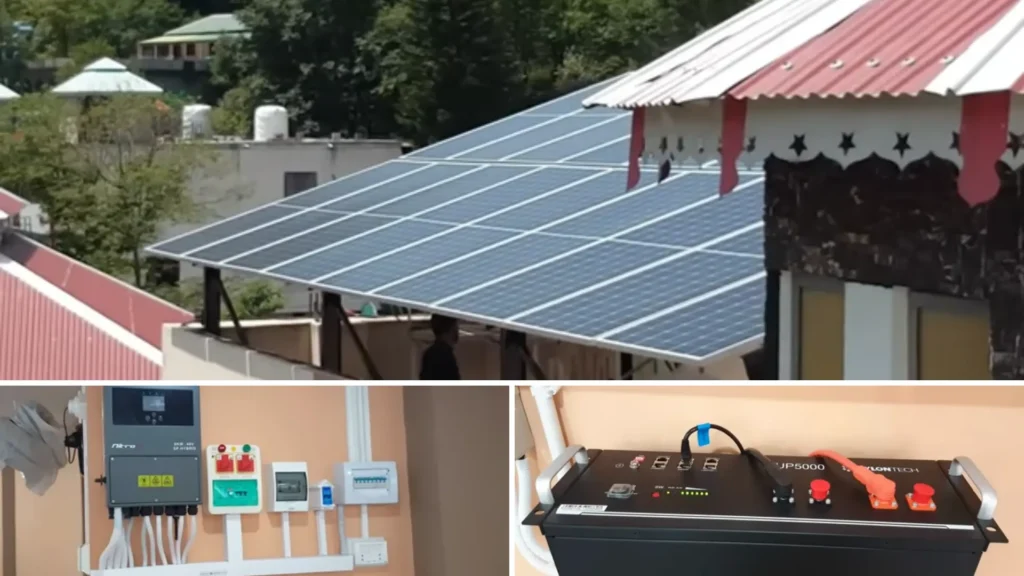
This is the question most buyers actually want answered, and it rarely gets a real number attached to it. Here’s the math:
- A 1.5-ton split AC draws roughly 1,200–1,500 watts while running (with a brief higher surge on startup).
- Three 1.5-ton ACs running together draw about 3,600–4,500 watts.
- That leaves 3,500–4,400 watts of an 8kW system’s capacity for refrigerators (150–300W each), lights, fans, a water pump, TV, and other everyday loads.
In short: an 8kW system comfortably runs 2–3 split ACs (1.5-ton) at once, alongside the rest of a normal household’s appliances — refrigerator, LED lighting, fans, a washing machine, an iron, a water motor, and basic office equipment if you’re running it for a small business. If your home runs mostly 2-ton ACs, treat two of them plus one 1.5-ton unit as a more realistic ceiling than three 2-ton units together.
For comparison, a 5kW system typically handles one 1.5-ton AC comfortably but struggles with two running simultaneously — which is exactly why households with 2–3 ACs outgrow 5kW and move up to 8kW.
Roof Space and Panels Required for an 8kW System
An 8kW system typically needs:
- About 14 solar panels of 585W (commonly 585W panels in Pakistan in 2026)
- 45–60 square meters of unshaded roof or open ground space
- A roof oriented for maximum direct sunlight — south-facing is ideal in Pakistan, with a tilt angle of roughly 15–20° for good year-round output and natural dust runoff
If your roof is older than 15 years or you’re mounting 20+ panels, ask your installer for a structural assessment before committing — added weight on an aging structure is a real, avoidable risk.
What Actually Moves the Price Up or Down
- Panel and inverter brand/grade — A-grade Tier-1 panels (Longi, Jinko, Trina, Canadian Solar, JA Solar) cost more per watt than B-grade but degrade slower and hold warranty coverage. Inverter brand matters just as much — confirm the inverter is rated for the full 8kW output, not just 8kW of panel input.
- Battery presence and capacity — the single biggest cost swing. A hybrid system with no battery versus one with a 10kWh lithium battery can differ by PKR 500,000 or more.
- Installation complexity — roof type, elevated structure needs (H-beam + C-channel typically add cost per panel over a standard ground/flush mount), and site accessibility all affect labor cost.
- Warranty length — genuine, paper-backed warranties (12-year product, 25-year performance on Tier-1 panels) cost more than vague verbal promises, and they’re worth it.
- Government incentives and taxes — periodic changes to import duties and provincial solar schemes can shift equipment cost; confirm current rates with your installer rather than relying on older figures.
Common Problems Buyers Run Into (And How to Avoid Them)
Most complaints about 8kW systems in Pakistan trace back to what happens before installation and during the paperwork — not the technology itself.
- Fake or relabeled panels. Rejected B-grade or C-grade panels get relabeled and sold at A-grade prices. Check the panel’s laser-etched serial number against the manufacturer’s official verification tool, and be suspicious of any price noticeably below the market rate — no supplier sells genuine Tier-1 panels at a loss.
- Undersized inverter sold as full 8kW. A dealer quotes “8kW” based on panel wattage but installs a 6kW-rated inverter. Always confirm the inverter’s rated output in writing, not just the PV input it can accept.
- Non-export inverter used for net billing. The system runs, but the inverter isn’t actually certified for grid export — so exported units are never credited, and you quietly lose the savings you were counting on. Confirm the inverter model is on NEPRA’s approved equipment list before installation.
- Net billing application delays or rejection. Usually caused by incomplete documentation, a Single Line Diagram not signed by a certified installer, non-compliant protection equipment, or a system size that exceeds your Sanctioned Load on your electricity bill. Approval typically takes 30–90 days with clean paperwork; incomplete files can stretch that to months.
- Cheap DC protection components. Low-quality breakers and surge protectors swapped in for what was quoted — invisible until a surge damages the inverter, a repair that can run PKR 200,000–500,000 on its own.
- Oversizing to inflate the sale. Some installers recommend a bigger system than your usage justifies because it means a bigger sale, not because you need it. Size against your actual bills, not a “bigger is safer” pitch.
- Verbal warranty promises with no paper trail. A 10–25 year warranty means nothing spoken. Get the warranty document and confirm who — manufacturer or authorized local distributor — actually honors it.
- Unregistered installers. DISCOs will refuse net-billing paperwork from a company that isn’t AEDB-registered, no exceptions. A cheaper quote from an unregistered installer often isn’t cheaper once you factor in a rejected application or unsafe wiring.
Net Metering and NEPRA’s 2026 Policy Shift
An 8kW system is fully eligible for net billing under NEPRA regulations, provided it’s installed by an AEDB-registered vendor using NEPRA-approved equipment. What’s changed in 2026 is the economics: since 9 February 2026, net metering has been replaced by net billing, where the buyback rate for exported units is roughly PKR 10–13 per unit – well below the retail import rate of about PKR 40–55+ per unit.
Practically, this means exporting surplus power to the grid is no longer as valuable as it used to be. Self-consumption — using your own solar power directly, or storing it in a battery for night use — now delivers more savings per unit than exporting it. This is the core reason hybrid systems with even a modest battery have become the default recommendation over pure on-grid setups in 2026.
Payback Period of an 8kW Solar System
Most 8kW hybrid systems in Pakistan pay for themselves within roughly 2.5 to 3.5 years, with some households in high-sunlight regions reaching full payback closer to 2–3 years. On-grid systems, being cheaper upfront, can pay back slightly faster in absolute terms — but without backup, you remain exposed to load-shedding losses that a hybrid setup avoids.
Worked example (illustrative, not a guarantee):
- System: hybrid 8kW with a modest battery, total cost ≈ PKR 1,150,000
- Monthly generation: ≈ 1,000 units
- Mixing self-consumption (avoiding the ~PKR 50/unit retail rate) with some export (credited at ~PKR 11/unit under net billing), a typical household might save somewhere in the PKR 35,000–45,000 per month range
- At that savings rate, full payback lands at roughly 2 to 3 years — consistent with the 2.5–3.5 year range most installers quote across system types
Your actual numbers will depend on your real consumption pattern, how much of your generation you use directly versus export, and local tariff changes — treat this as a way to sanity-check a quote, not a promise.
FAQs
What is the price of an 8kW solar system in Pakistan?
An 8kW solar system in Pakistan costs between PKR 800,000–950,000 for on-grid, and PKR 950,000–1,700,000 for hybrid with a battery, depending on component quality and battery capacity — figures reflect current 2026 market pricing across multiple suppliers.
How many units does an 8kW solar system produce per day?
An 8kW system typically produces 30–35 units per day depending on sunlight availability, panel angle, and season, adding up to roughly 900–1,100 units per month in most regions of Pakistan.
How many ACs can an 8kW solar system run?
An 8kW system comfortably runs 2–3 split ACs (1.5-ton) simultaneously alongside normal household loads like a refrigerator, lighting, fans, and a washing machine.
Is an 8kW solar system eligible for net billing in Pakistan?
Yes — an 8kW system is fully eligible for net billing under NEPRA regulations, provided it’s installed by an AEDB-registered vendor using NEPRA-approved equipment and matches your sanctioned load.
What is the payback period of an 8kW solar system in Pakistan?
Typically 2.5 to 3.5 years, depending on your monthly savings, how much power you self-consume versus export, and current net-billing rates.How many solar panels and how much roof space does an 8kW system need?
Final Word
An 8kW solar system is one of the most practical investments available to a mid-to-large Pakistani household in 2026 — it’s sized right for 2–3 ACs and normal daily use, pays for itself in roughly 2.5–3.5 years, and shields you from both rising tariffs and load-shedding when paired with even a modest battery. The price range is wide because the category is wide — the real work isn’t finding the cheapest quote, it’s making sure the quote you get is for a genuine, correctly rated, properly warrantied system installed by someone who’ll still be reachable when you need a warranty claim honored.%. Eight thousand watts of electricity can be generated by its use. Therefore, its price depends on the quality of its ingredients. So we can say that using an 8kw solar system can save lakhs of rupees annually.