10kW Solar System Price in Pakistan 2026: The Real Cost, Not Just a Number
If you’ve searched this already, you’ve probably noticed something annoying: every website gives you a different price. One says PKR 750,000. Another says 1.3 million. A third says 2.3 million. None of them explain why.
Here’s the honest answer: a 10kw solar system price in Pakistan in 2026 costs anywhere from PKR 850,000 to PKR 2,300,000, and the reason the range is so wide isn’t sloppy research — it’s that “10kW solar system” describes at least three genuinely different products (on-grid, hybrid, off-grid), each built from components that vary 3-4x in price depending on brand. A PKR 850,000 system and a PKR 1.9 million system might both be called “10kW,” and both might work fine — they’re just not the same thing.
This guide breaks the price down by what’s actually inside the system, not just a headline number, and covers the one thing almost nothing else online currently mentions: Pakistan’s net metering rules changed in February 2026, and it directly affects what you’ll actually save.
Quick Price Summary 10kw solar system price in Pakistan (2026)
| System Type | Price Range (PKR) | Battery Included? | Best For |
|---|---|---|---|
| On-Grid | 850,000 – 1,300,000 | No | Lowest upfront cost, no load-shedding backup |
| Hybrid | 1,300,000 – 2,000,000 | Yes (10-15 kWh) | Backup power + bill reduction |
| Off-Grid | 1,800,000 – 2,500,000+ | Yes (larger bank) | No WAPDA connection, rural/farm use |
These ranges reflect real market quotes across Karachi, Lahore, and Islamabad installers in mid-2026. Your actual quote will land somewhere in these bands depending on panel brand, inverter brand, and battery chemistry — which is exactly what the next section breaks down.
What Actually Makes Up the Price? (Component Breakdown)
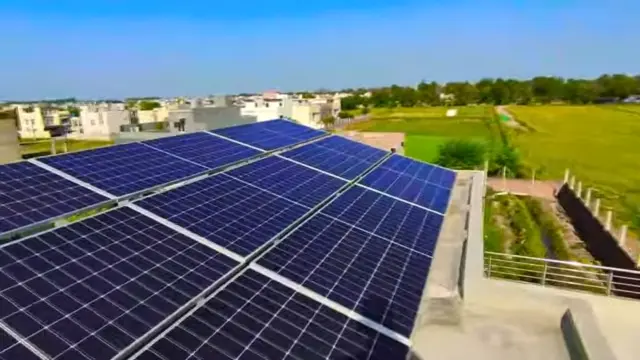
Most price guides give you a single number and stop there. That’s not useful when you’re staring at three quotes that don’t match. Here’s what a 10kW hybrid system is actually built from, and what each piece typically costs in 2026:
| Component | Typical Spec | Estimated Cost (PKR) |
|---|---|---|
| Solar panels (Tier-1) | 18-20 panels, 540-600W each (Jinko, Longi, Canadian Solar, Trina) | 400,000 – 550,000 |
| Hybrid inverter | 10kW (Growatt, Inverex Nitrox, Solis, GoodWe, Huawei) | 260,000 – 400,000 |
| Lithium battery bank | 10-15 kWh | 350,000 – 700,000 |
| Mounting structure | L2/L3 galvanized, roof or elevated | 55,000 – 95,000 |
| Wiring, breakers, DC/AC protection | Copper cabling, surge protection, earthing | 60,000 – 130,000 |
| Installation & labor | Certified installer team | 45,000 – 70,000 |
| Net metering application | DISCO filing + bidirectional meter | 100,000 – 130,000 |
Add these up and you land close to the hybrid range above. On-grid systems simply drop the battery line, which is why they cost roughly PKR 400,000-600,000 less than hybrid.
One thing worth knowing before you get quotes: the inverter brand alone can swing your price by PKR 150,000 or more. Huawei and premium GoodWe models sit at the top; Solis, Growatt, and Inverex Nitrox are the more budget-friendly, still-reliable middle tier. Ask installers exactly which brand and model they’re quoting — “hybrid inverter” alone tells you nothing about the price you should expect to pay.
10kW vs 10kVA vs 10kWh: Why Your Search Results Don’t Agree
This trips up almost everyone shopping for solar in Pakistan, and it’s a big reason prices online look inconsistent.
- kW (kilowatt) measures real power — the actual electricity your system can produce or your appliances can draw. This is what “10kW solar system” refers to.
- kVA (kilovolt-ampere) measures apparent power, mainly used to rate inverters. A “10kVA inverter” is not automatically the same thing as a 10kW solar system — check the inverter’s actual rated output in kW, since the two numbers aren’t always identical.
- kWh (kilowatt-hour) measures energy over time — this is what shows up on your electricity bill and what your solar system actually generates per day or month. A 10kW system doesn’t produce “10kW” of electricity all day; it produces 10kW at peak output and roughly 35-59 kWh (units) across a full sunny day.
If you’ve searched “10kVA solar system price” and gotten confusing results, this is why — you were technically asking about inverter capacity, not system size. For sizing a rooftop solar setup, kW is the number that matters.
Net Metering Just Changed: What the 2026 Net Billing Rules Mean for You
This is the part most 2026 pricing guides still haven’t updated for, and it changes your actual ROI math.
Until February 2026: Pakistan ran on net metering. Every unit of surplus electricity you exported to the grid earned one unit of credit on your bill — a straight one-for-one swap.
From February 2026 onward: NEPRA replaced this with a “net billing” system under the Prosumer Regulations 2026. Your DISCO now buys your surplus electricity at the national average power purchase price, and sells electricity back to you at the full consumer tariff — not a one-for-one trade. In plain terms: exporting extra units is worth noticeably less than it used to be.
What this means practically:
- If your net metering was approved before February 9, 2026, your existing contract terms stay protected until they expire (these run around 7 years) — NEPRA confirmed this in a later clarification.
- If you’re installing new in 2026, size your system closer to your actual daytime usage instead of oversizing for maximum export. Export credit is worth less now, so self-consumption is where the real savings live.
- This is a big part of why hybrid systems have become more popular in 2026 — storing your own surplus in a battery and using it yourself, instead of selling it back at a lower rate, protects more of your savings under the new rules.
- Don’t expand an existing net-metered system casually. Increasing the output of a system already approved under the old rules can cost you the tariff protection tied to your original agreement.
Even under the revised buyback rate, a properly sized 10kW system generally still pays for itself inside the commonly cited 5-year window — it’s just that hitting that number now depends more on matching your system to your actual consumption than it used to.
How Much Electricity Does a 10kW System Actually Produce?
Output depends heavily on your city and the season:
| City / Region | Daily Output (kWh) | Monthly Output (kWh) |
|---|---|---|
| Karachi, Multan (strong year-round sun) | 40-59 | 1,200-1,770 |
| Lahore, Islamabad | 35-55 | 1,050-1,600 (lower in winter) |
| Smaller cities & upcountry (e.g. Layyah, Bahawalpur belt) | 35-50 | 1,050-1,500, similar to Multan-tier sunlight |
A simple rule of thumb: 900-1,000 units of monthly consumption is the point where a 10kW system starts making sense. Below that, you’re likely oversized (a 5kW or 7kW system fits better); above roughly 1,500 units with heavy AC load, most installers will point you toward 15kW instead.
| Monthly Electricity Consumption (units) | Recommended System Size |
|---|---|
| 500-600 | 5kW |
| 600-700 | 7kW |
| 900-1,000 | 10kW |
| 1,300-1,500+ | 15kW |
Is 10kW Enough to Run a House?
Short answer: yes, for most large households — with some staggering of heavy loads.
What a 10kW system comfortably runs:
- 2-3 inverter air conditioners (1.5-ton), run in staggered shifts rather than all at once
- 2-3 refrigerators or deep freezers
- 15-20 fans and 25-30 LED lights
- Washing machine, microwave, and standard kitchen appliances
- Water pump/motor, TVs, computers, and routine electronics
Where it gets tight: running 4 or more ACs simultaneously during peak afternoon heat will push a 10kW system near its ceiling. Each 1.5-ton inverter AC draws roughly 9.6 units across 8 hours of use — three of them running together for a full afternoon already uses more than half your system’s daily output. If your household regularly runs 4+ ACs at once, 15kW is the more realistic size.
Roof Space and Panel Count
The panel count and roof space you need depends entirely on panel wattage:
| Panel Wattage | Panels Needed | Roof Space Required |
|---|---|---|
| 600W | 17 | 680-730 sq ft |
| 585W (2026 standard) | 18 | 700-750 sq ft |
| 550W | 19 | 740-800 sq ft |
| 450W | 22-23 | 850-920 sq ft |
| 400W | 25 | 900-980 sq ft |
The math is simple: 10,000W divided by your panel’s wattage, rounded up. Higher-wattage panels mean fewer panels and less roof space — worth factoring in if your roof is small or partially shaded.
One thing worth checking before installation day: 18-20 panels plus a galvanized mounting structure adds roughly 500-600 kg to your roof. If you have an older RCC slab, it’s worth a quick structural check rather than assuming it can take the load.
Common Installer Mistakes and Scams to Watch For
A wrong price estimate is annoying. A bad installer can cost you your net metering approval entirely, or leave you paying full price for a system that quietly underperforms. These are the patterns that catch the most buyers:
- Bait-and-switch pricing. A low quote over the phone, then “extra wiring,” “structure cost,” or “net metering fees” get added after the site visit. Get every line item in writing before the visit, not after.
- Fake or downgraded panels. Some installers advertise Tier-1 brands like Jinko or Longi but deliver unbranded or lower-tier panels instead. Ask for the panel datasheet and serial numbers, and check them against the manufacturer’s official distributor list.
- Non-export inverters sold for net metering setups. The system runs fine and powers your home — but because the inverter isn’t export-capable, your surplus is never credited, and you lose savings every month without realizing it.
- Deliberately delayed net metering paperwork. Some installers stall the DISCO application for months while your system runs without export credit. Put a specific paperwork timeline in your contract, and track the application yourself through your DISCO’s portal.
- Installer keeps sole access to the inverter monitoring app. If you can’t see your own generation and export numbers, you can’t verify the installer’s claims or catch a problem early. Get your own login at handover, not just theirs.
How to Verify an Installer Before You Pay
- Confirm the company holds active AEDB certification (Category V1 or V2). Only AEDB-registered installers can legally submit net metering applications to your DISCO — an unregistered vendor’s paperwork gets rejected outright, often only discovered after you’ve already paid.
- Check that the quoted inverter is on NEPRA’s approved equipment list — this is one of the most common places unverified installers cut corners.
- Get written warranty terms — typically 20-25 years for panels, 5-10 years for inverters — with specific durations, not a verbal promise.
- Be cautious of unrealistically fast timelines. Legitimate net metering approval through DISCOs like LESCO, IESCO, MEPCO, or K-Electric takes roughly 30-45 days. A company promising it in days is usually skipping documentation.
- Get at least three quotes and compare them component-by-component — panel brand, inverter brand, battery chemistry — not just the bottom-line number.
Net Metering Process and Cost
For a 10kW system, expect the net metering process to look like this regardless of which DISCO you’re under:
- Cost: roughly PKR 100,000-130,000, covering the DISCO application, inspection, and bidirectional (green) meter installation
- Timeline: 30-45 days from application to approval, assuming your installer is AEDB-registered and your paperwork is complete
- Applies through: your local DISCO — LESCO in Lahore, IESCO in Islamabad, MEPCO in Multan, K-Electric in Karachi, and equivalent DISCOs elsewhere
Financing Options If You Can’t Pay Upfront
A 10kW system easily crosses PKR 1 million, which isn’t a small ask for most households. A few routes exist if you’re not paying the full amount upfront:
- Installment plans through solar-focused financing platforms — some vendors now offer structured monthly installment plans specifically for solar packages rather than requiring the full amount at purchase.
- Bank green financing schemes — several Pakistani banks run dedicated renewable energy or “green” financing products with lower markup rates than standard personal loans; worth comparing before committing to an installer’s in-house plan.
- Phased installation — installing a smaller on-grid system first (say, 5kW) and expanding later is possible, but remember the net billing caution above: expanding a system already approved under old net metering terms can affect your existing tariff protection, so plan your target size with your installer from the start rather than assuming a cheap upgrade path later.
Payback Period: How Long Until It Pays for Itself
Most properly sized 10kW systems in Pakistan pay for themselves in 3 to 5 years, after which the electricity is essentially free for the remaining 15-20+ years of usable system life. Your actual number depends on:
- Your current DISCO tariff and how fast it rises
- How much of your generation you self-consume versus export (more important now, under net billing)
- System efficiency and upkeep — panel cleaning, inverter servicing
With grid tariffs having risen sharply over the past few years, most new owners in 2026 are seeing payback periods at the faster end of that range compared to systems installed even two or three years ago.
Frequently Asked Questions
What is the price of a 10kW solar system in Pakistan in 2026?
On-grid systems typically run PKR 850,000-1,300,000. Hybrid systems with battery backup run PKR 1,300,000-2,000,000. Off-grid systems, which need a much larger battery bank, run PKR 1,800,000-2,500,000 or more. Exact pricing depends on panel brand, inverter brand, and battery chemistry.
How many units does a 10kW solar system produce per month?
Roughly 1,050 to 1,770 units (kWh) per month, depending on your city’s sunlight and the season. Karachi and Multan sit toward the higher end; Lahore and Islamabad see somewhat lower output in winter.
Is 10kW enough to run a house?
Yes, for most large households — it comfortably handles 2-3 inverter ACs (staggered), refrigerators, fans, lights, and standard appliances. Households regularly running 4+ ACs simultaneously should consider 15kW instead.
How many AC units can a 10kW solar system run?
2-3 inverter ACs (1.5-ton) can run simultaneously during peak sunlight hours without issue. Running more than that at once will strain the system’s daily output.
How much does a 10kVA inverter cost, and is it the same as a 10kW system?
Not necessarily — kVA measures apparent power (mainly for rating inverters), while kW measures the real power your solar panels produce. A “10kVA inverter” quote isn’t automatically a full 10kW solar system; always check the inverter’s actual rated kW output and confirm it matches your panel array size.
Did net metering end in Pakistan in 2026?
Yes. NEPRA replaced net metering with a “net billing” framework under the Prosumer Regulations 2026, effective February 2026. New installations are compensated for exported electricity at the national average power purchase price rather than getting one-for-one credit. Existing net-metered users keep their original contract terms until expiry.
How long does net metering approval take, and what does it cost?
Through DISCOs like LESCO, IESCO, MEPCO, or K-Electric, expect roughly 30-45 days and PKR 100,000-130,000, covering the application, inspection, and bidirectional meter installation — assuming your installer is AEDB-registered.