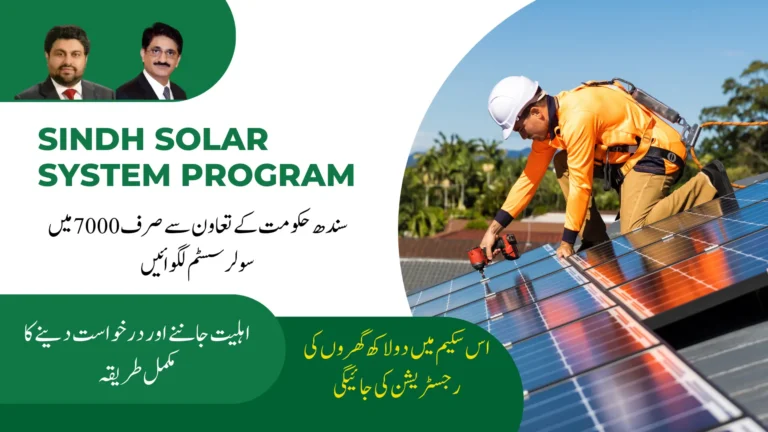
Govt Of Sindh is committed to providing up to 100 units of free electricity
Update (October 2026): Sindh government ka ye 2024 wala elaan ab aik practical project ki shakal le chuka hai — Sindh Solar Home Systems project, jo April 2025 me shuru hua aur June 2027 tak mukammal hona hai. Is ke tehet 275,000 low-income families ko muft solar home system milega: on-grid “protected” consumers jo mahana 0–100 units istemal karte hain (143,000 families) aur off-grid/dur-daraz ilaqon ke ghareeb gharane (132,000 families). Har kit me 180-watt solar panel, lithium battery, DC fan aur LED lights shamil hain. 2026 ke wast tak 15,000 se zyada kits mukhtalif districts me install ho chuki thin (Karachi, Tharparkar, Umerkot, Dadu, Ghotki waghera). BISP-registered families ko tarjeeh di ja rahi hai.
Sources: The News (CM review meeting report), ProPakistani (17 July 2026).
Sindh Energy Minister Syed Nasir Hussain Shah has announced a new initiative to provide up to 100 units of free electricity to consumers in Sindh through solar power. This plan is part of the Sindh government’s effort to establish solar parks, which will supply electricity to the national grid. The Pakistan Peoples Party (PPP) is strongly against imposing taxes on solar energy, emphasizing its importance for the province’s energy future.
To know about solar plate prices, click here.

Speaking at the Federation of Pakistan Chambers of Commerce & Industry (FPCCI), Shah highlighted the government’s commitment to addressing issues like load-shedding and overbilling. He assured that the government would consider the energy suggestions from the business community. The Sindh government has raised these concerns with the Ministry of Energy and demanded that no taxes be imposed on solar power on platforms like the Council of Common Interests (CCI) and the National Economic Council (NEC).
The plan includes developing solar parks on 600 acres each in Malir and West districts of Karachi, with another park being developed in Jamshoro. Shah noted that solar energy is a proven successful model, with three ongoing projects, and he called for more collaboration with the government to expand this model.
Shah also pointed out that Sindh provides the cheapest electricity to the national grid, especially from Thar coal, at just 5.50 rupees per unit. In comparison, other parts of the country produce electricity at 60 rupees per unit. The constitution grants provinces the first right to this power, allowing Sindh to benefit from these low costs. Additionally, projects have begun in three more blocks in Thar, with the potential for up to 100 power plants.
This initiative aims to make energy more affordable and sustainable for the people of Sindh while promoting the use of renewable energy sources like solar power.