Net Billing in Pakistan — Complete Guide 2026 (Net Metering Has Been Replaced)
Important update — February 2026: If you are planning to install solar and export extra electricity to the grid, the system you may know as “net metering” no longer exists for new connections. On 9 February 2026, NEPRA’s new Prosumer Regulations 2026 replaced net metering with net billing. The green meter, the application process, and the idea of selling your extra units are all still there — but the way your bill is calculated has changed completely. This guide explains how net billing works, what rate you get for exported units, who is eligible, and how to apply through your electricity company (DISCO).
Last updated: October 2026. This guide is based on NEPRA’s Prosumer Regulations 2026 (SRO 251(I)/2026) and its amendments SRO 547(I)/2026 and SRO 1330(I)/2026. Where a rate can change, we say so — always confirm the latest figure with your DISCO before making a decision.
What is Net Billing?
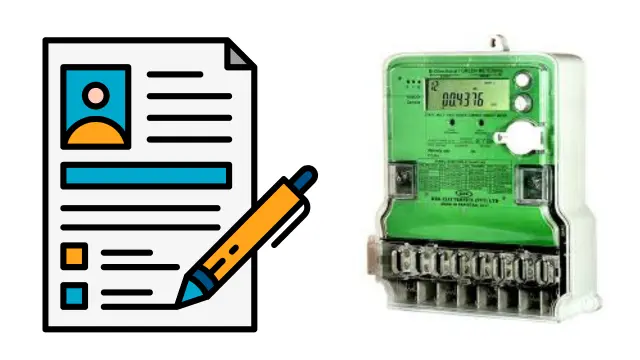
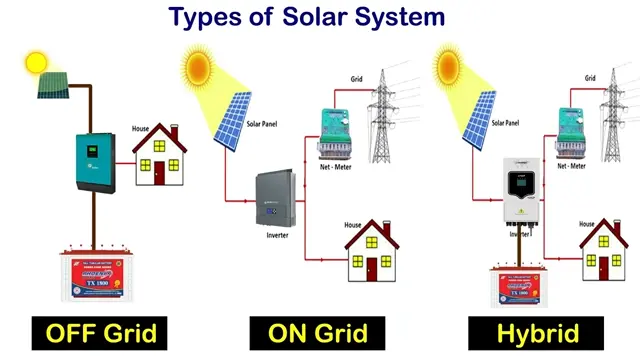
Net billing is the system that lets you export the extra electricity your solar panels generate to the national grid — and get paid for it. It works with an on-grid solar system or a hybrid system with export enabled, and your DISCO installs a bidirectional (green) meter that records two things separately:
- Import — the units you take from the grid (mostly at night and on cloudy days)
- Export — the extra units your panels send to the grid during the day
Under net billing, these two are not cancelled out unit-for-unit. Your imported units are billed at your normal electricity tariff (the same slab rates as any consumer), and your exported units are credited separately at the National Average Energy Purchase Price (NAEPP) — a much lower rate than your slab tariff. Your final bill is simply: import charges − export credit, plus the usual taxes and adjustments. If your export credit is ever worth more than your import bill, the difference carries over to your next bill or is paid to you quarterly.
Net Metering vs Net Billing — What Actually Changed?
| Old Net Metering (before Feb 2026) | Net Billing (from 9 Feb 2026) | |
|---|---|---|
| How units are settled | 1 exported unit cancelled out 1 imported unit | Import and export are priced separately |
| Export value | Worth close to your retail tariff (around Rs 26/unit in the final net-metering years) | Credited at NAEPP — reported around Rs 10–11/unit at notification; NEPRA’s 2026 forecast put it near Rs 8.13/unit, and NEPRA can revise it at any time |
| Bill result | Near-zero bills were possible | A bill remains for imported units; exports reduce it, not erase it |
| Agreement term | 7 years | 5 years, renewable by mutual consent |
| System size | Up to 150% of sanctioned load | Up to your sanctioned load only (maximum 1 MW) |
| Best strategy | Oversize the system and export the surplus | Size the system to your daytime usage and use your own solar first |
Is net metering still available in Pakistan?
For new solar connections, no. Since 9 February 2026, new applicants are connected under net billing only. The words “net metering” are still used by dealers, installers, and even some DISCO staff out of habit — and the green meter itself is the same idea — but the billing method behind it is net billing now.
I already have net metering — what happens to my system?
Good news: your agreement is protected. Under NEPRA’s amendment SRO 547(I)/2026, an agreement signed under the old net metering rules keeps its old rate and billing method until the agreement expires. Two things to be careful about:
- This protection ends early if you materially modify your system in a way that changes its maximum output — for example, adding more panels or fitting a bigger inverter. Think carefully before expanding an old net metering system.
- When your agreement does expire, renewal will be under net billing.
How Much Do You Get for Exported Units?
Your exported units are credited at the National Average Energy Purchase Price (NAEPP). The regulations do not fix a rupee figure — the rate was reported around Rs 10–11 per unit when the rules were notified in February 2026, NEPRA’s own power purchase price forecast for 2026 put it at about Rs 8.13 per unit, and NEPRA can revise it by notification at any time. Compare that with what you pay for imported units: depending on your slab, roughly Rs 22 to Rs 47+ per unit before taxes and adjustments in 2026. The rate actually applied to you appears on your monthly bill — that is the figure to trust.
A simple example (illustrative — your actual figures depend on your system and usage): A 10 kW system generates about 40 units on a good day. Your home uses 25 of those units directly during the day and exports 15. At an export rate of Rs 10/unit, those 15 units earn you about Rs 150 of credit — while every unit you used directly saved you the full slab rate of Rs 22–47. Under the old net metering, the same 15 exported units would have wiped out 15 imported units completely.
The lesson is clear: under net billing, a unit you use yourself is worth 2–4 times more than a unit you export.
Is Solar Still Worth It Without Net Metering?
Yes — but the maths has changed, and so should your system design:
- Size to your daytime load. A system matched to what your home actually uses between morning and evening pays back fastest. Oversizing “for export profit” no longer works.
- Shift your heavy usage to the day. Run the AC, washing machine, water pump and iron while the sun is shining.
- Storage makes more sense now. A hybrid solar system with batteries stores your daytime surplus for the evening instead of exporting it cheaply. Compare options on our Osaka battery price in Pakistan page.
- Not sure what size you need? Use our solar system load calculator and the system size guides below.
Who Is Eligible for Net Billing?
Under the Prosumer Regulations 2026:
- You must be a three-phase (400V or 11kV) consumer — single-phase homes need to upgrade to three-phase first
- Your solar system’s capacity must be within your sanctioned load and not more than 1 MW
- The electricity connection should be in your name, with your CNIC and a recent electricity bill for the application
- Approvals are now simpler for homes: systems of 25 kW or less are approved by your DISCO directly, with no NEPRA fee. Above 25 kW, NEPRA’s concurrence is required with a one-time fee of Rs 1,000 per kW
- Your installation should be done by a certified installer (AEDB’s certification functions now sit with the PPIB — ask your installer for their current certification and check it)
- Two practical limits to know: new connections on a transformer stop once connected generation reaches 80% of the transformer’s rating, and the interconnection and metering costs are paid by you, the prosumer
How to Apply for Net Billing (Green Meter) in Pakistan
The process runs through your local distribution company — LESCO in Lahore, IESCO in Islamabad/Rawalpindi, K-Electric in Karachi, and MEPCO, PESCO, FESCO, GEPCO, HESCO, SEPCO and QESCO in their regions.
Step 1 — Prepare your documents: CNIC, your latest paid electricity bill, and the property/connection documents your DISCO asks for.
Step 2 — Choose a certified installer: Pick an installer with verifiable certification and a proper office you can go back to. Get the panel serial numbers written on your invoice — this protects your warranty as well.
Step 3 — Site survey and system installation: The installer checks your roof, your load and your sanctioned load, then installs the system sized to your daytime usage.
Step 4 — Submit the application to your DISCO: Fill in the prosumer (net billing) application form and submit it with your documents. Most DISCOs accept applications at their customer service centres, and several offer online submission.
Step 5 — DISCO inspection: The DISCO inspects the installation for technical compliance. The regulations set timelines for this process — acknowledgement within about 5 working days and technical review within about 15 days. If something is deficient, they will tell you what to fix.
Step 6 — Green meter installation: After approval and payment of the applicable charges, the DISCO installs the bidirectional (green) meter that records import and export separately.
Step 7 — Sign the agreement: You sign the prosumer agreement with your DISCO — under the 2026 regulations the term is 5 years, renewable by mutual consent. After this, your exported units start appearing as credit on your monthly bill.
How to Read Your Net Billing Electricity Bill
Your bill now shows import and export as separate lines. Look for:
- Import units — billed at your normal slab tariff, plus fuel price adjustment and taxes
- Export units — credited at the NAEPP rate applied for that period
- Net payable — import charges minus export credit, plus fixed charges and government levies
If your export credit is missing or looks wrong, contact your DISCO’s customer service first with your green meter readings; if it is not resolved, you can escalate the complaint to NEPRA.
Best System Sizes for Homes Under Net Billing
Because self-consumption matters more now, match your system to your monthly units and daytime usage:
| Monthly Electricity Units | Suggested System |
|---|---|
| 500–600 | 5kW Solar System |
| 1100–1200 | 10kW Solar System |
| 1700–1800 | 15kW Solar System |
| 2300–2400 | 20kW Solar System |
| 2800–3000 | 25kW Solar System |
And whatever size you choose, the panels themselves matter most — check today’s solar panel prices in Pakistan on our homepage before you take any dealer’s quote as final.
FAQs
What is the difference between net metering and net billing?
Under net metering, exported units cancelled out imported units one-for-one. Under net billing (from 9 February 2026), imports are billed at your normal slab tariff and exports are credited separately at the lower NAEPP rate.
What is the net billing export rate in Pakistan in 2026?
Exports are credited at the National Average Energy Purchase Price (NAEPP). It was reported around Rs 10–11 per unit when the regulations were notified in February 2026, and NEPRA’s 2026 forecast put it near Rs 8.13 per unit. NEPRA can revise it at any time — the rate on your own bill is the one that applies to you.
I have an old net metering agreement. Will it change?
No — under SRO 547(I)/2026 it keeps its old rate and billing method until it expires. But a material modification, such as adding panels, ends that protection early.
Can I still get a zero bill with solar?
In practice, no. You will still pay for the units you import (nights, cloudy days), fixed charges and taxes — exports only reduce the bill. Using most of your solar yourself keeps the bill lowest.
What is a green meter?
A green meter is the bidirectional meter your DISCO installs for solar consumers. It records the units you import from the grid and the units you export to it, separately.
How long does the net billing process take?
The regulations set timelines for DISCOs — acknowledgement in about 5 working days, technical review in about 15 days, and interconnection after approval and payment. Incomplete documents are the most common cause of delay.
My dealer still promises “net metering, zero bill” — should I believe him?
Be careful. New connections are under net billing since February 2026. Any dealer still selling on the old promise is either outdated or not being honest — ask him to explain net billing and the NAEPP rate before you pay anything.
Conclusion
Net billing has changed the solar equation in Pakistan, not ended it. Electricity from the grid keeps getting more expensive, and a well-sized solar system that you actually use during the day still protects you from the worst of it — it just no longer pays to build a power plant on your roof for export. Size it right, use your own units first, consider storage, and you will still come out well ahead. Happy hunting for the ideal solar setup!